Exercises for plantar fasciitis are the initial treatment with the most evidence: stretching the fascia and the calf, and strengthening the foot arch, reduces pain in most cases within 6 to 12 weeks. They do not work miracles in three days. They do something better: they tackle the cause.
This guide compiles the protocol we use in the clinic. It consists of five exercises, fits into fifteen minutes a day, and requires no equipment other than a towel, a wall, and a frozen bottle.
Why exercise works better than rest
The plantar fascia is a band of tissue that supports the arch of the foot. When it is overloaded, it hurts; and when it hurts, instinct calls for complete rest. Bad idea.
Complete rest unloads the fascia for a few days, but it also weakens the foot and the calf. When walking is resumed, the tissue is just as irritated and has less capacity. This is why plantar fasciitis that “heals on its own with rest” recurs so often.
Exercise does the opposite: it exposes the fascia to a controlled and progressive load, which is the signal this tissue needs to repair itself. It is the same principle used in chronic tendinopathies.
This does not mean pushing through any pain or maintaining the same level of activity. The load must be tolerable and stable. If you are clearly worse the next day, reduce the repetitions, range of motion, or intensity for a few days. The correct progression is one that allows you to advance without pain building up.
Before starting: confirm it is fasciitis
Not all heel pain is plantar fasciitis. A heel spur, fat pad atrophy, or nerve entrapment give similar symptoms and are treated differently.
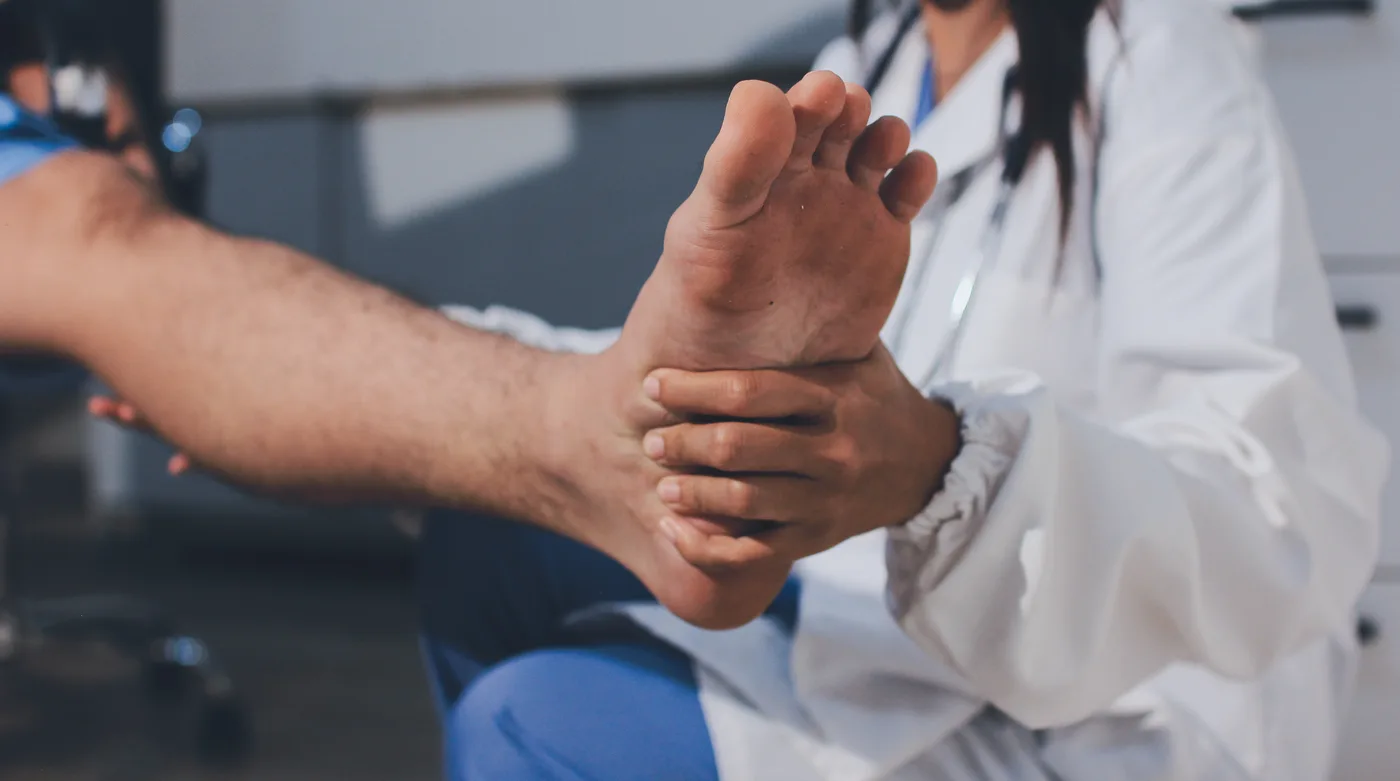
The classic clue for fasciitis: a stabbing pain at the base of the heel with the first steps in the morning, which eases after walking for a while and returns after sitting down. If this is your case, this protocol is well on track; if you are unsure, an in-clinic ultrasound confirms the diagnosis at the first visit.
Consult beforehand if the pain started after a direct impact, if you cannot bear weight on the foot, if there is tingling or loss of sensation, or if the heel is swollen and warm. It is also advisable to have it assessed if the pain is nocturnal, progressive, or very different from the usual pattern of the first steps.
The five exercises with the most evidence
Do them barefoot. None of them should produce sharp pain: mild discomfort is acceptable, pain that makes you clench your teeth is not.
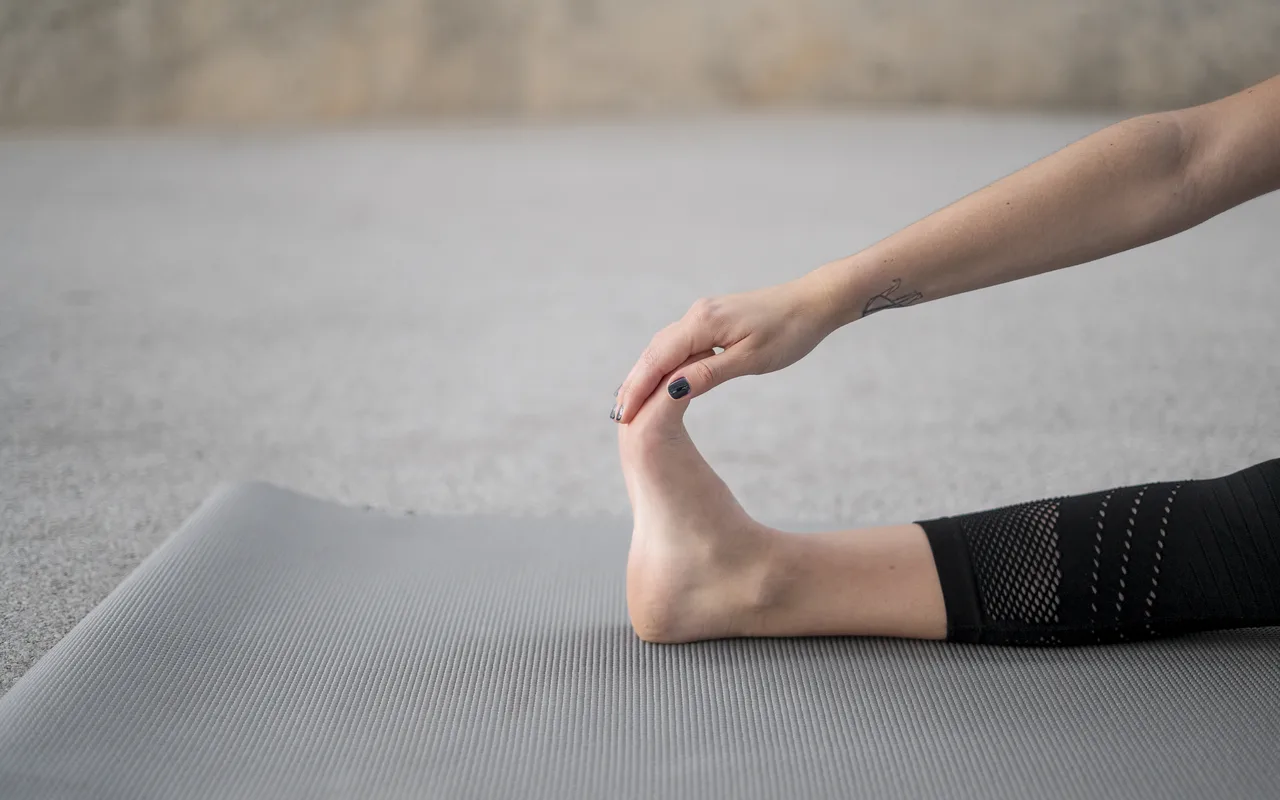
Technique is more important than doing many repetitions. Move slowly, breathe normally, and avoid compensating by turning your ankle or loading all your weight onto the outer edge of the foot. If you are very sensitive, start with less time and increase it gradually.
1. Hand-assisted fascia stretch
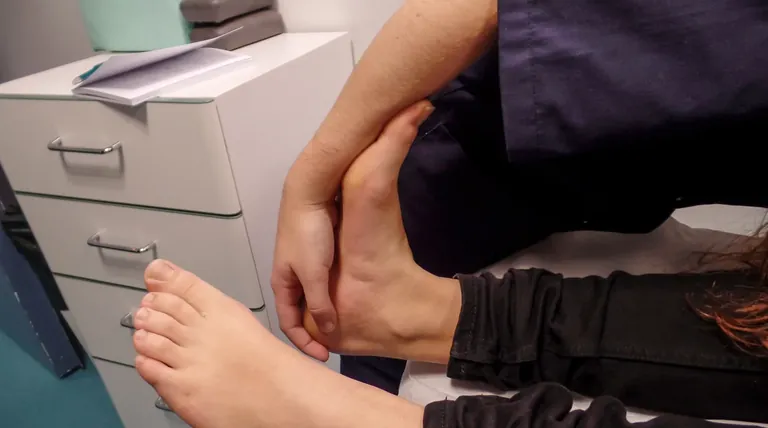
Sitting down, cross the affected foot over the other knee. With your hand, pull your toes back towards your shin until you feel tension in the sole of your foot. Hold for 30 seconds and repeat 3 times.
This is the most specific stretch that exists, and the best time to do it is before getting out of bed: it prepares the fascia for those first steps that hurt so much.
There is no need to force the ankle or lean the trunk forward. The sensation should be concentrated in the sole, not turn into an intense tightness in the toes. You can also do it after sitting for a long time, before standing up.
2. Gastrocnemius and soleus stretch against a wall
Standing in front of a wall, step forward with one leg and leave the leg with the affected heel behind, with the foot pointing straight ahead and the heel on the floor. Lean towards the wall until you feel the stretch in your calf: 30 seconds, 3 repetitions.
Then repeat with the back knee slightly bent. This also stretches the soleus, the deep muscle that almost everyone forgets and which pulls directly on the heel.
Make sure the back foot does not roll outwards and that the heel does not lift off. If you have poor balance, place one hand on the wall and reduce the distance between your feet. The aim is to feel tension, not to reach the limit of your mobility.
3. Rolling a cold bottle
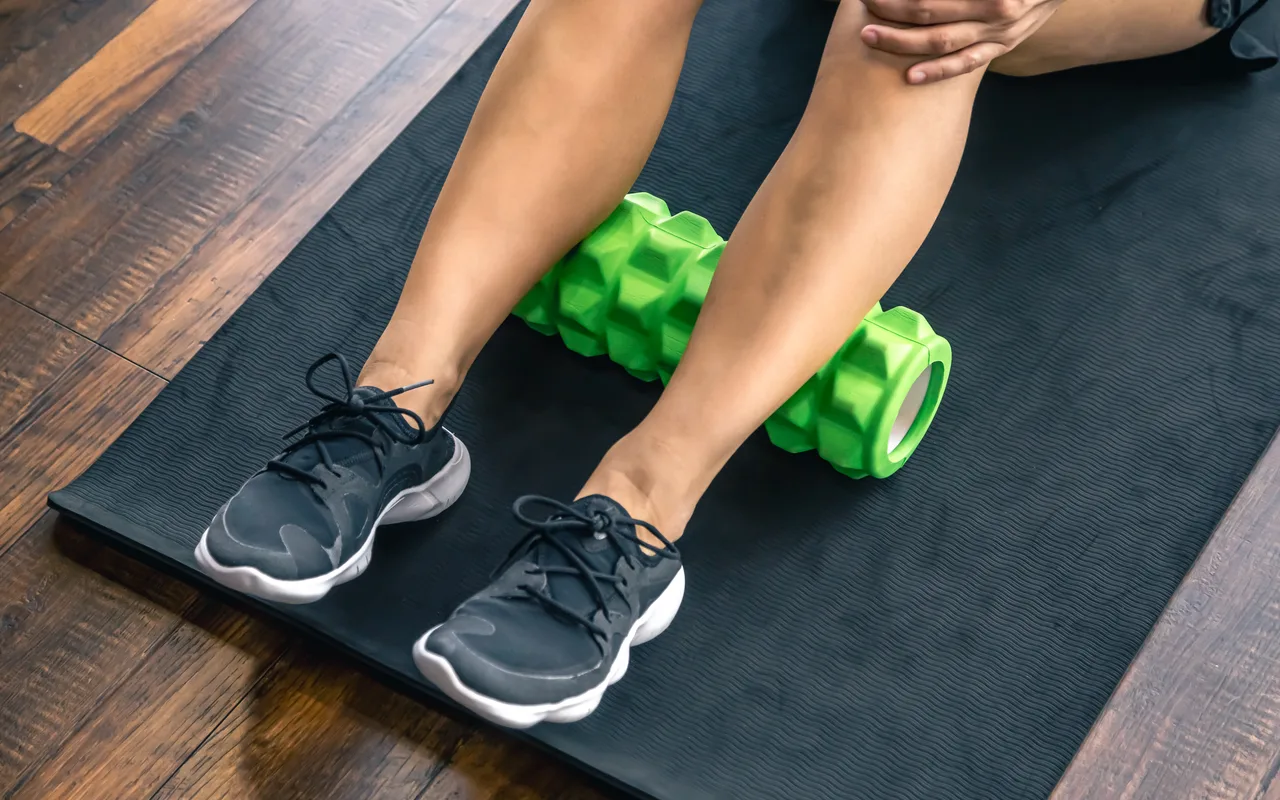
Freeze a small bottle of water. Sitting down, roll it under the sole of your foot for 3-5 minutes, from the heel to the base of the toes.
It combines a fascia massage with local cold: short-term relief, ideal at the end of the day or after training.
Do not press so hard that the pain increases afterwards. The cold can temporarily numb the area and make you overdo the pressure without realising it. If you have sensation or circulation problems, consult before using intense cold.
4. The towel: strength for the arch
Sitting down, with your foot on a towel spread out on the floor, pull it towards you by scrunching it up using only your toes. Two sets of 15 repetitions.
It may not seem like much, but it is: it activates the intrinsic muscles of the foot, the ones that support the arch and take the load off the fascia with every step.
Keep your heel in contact with the floor and do not try to grab the towel with your toenails. In this exercise, we are looking for a controlled movement of the toes and an activation of the entire sole. Once the movement becomes easy, you can do it with a thicker towel, but there is no need to turn it into a competition.
5. Slow heel raises
Standing, with your forefoot on a step and a rolled-up towel under your toes, raise your heels over 3 seconds, hold for 2 at the top, and lower over 3 seconds. Start with 3 sets of 8-12, every two days.
This is the progressive loading exercise with the most support in recent studies. When 12 repetitions become easy, add weight using a rucksack.
At first, you can do them with both feet whilst holding onto a handrail. Later on, if there is no pain reaction the next day, progressively transfer more weight onto the affected foot. Do not let your ankle roll inwards or lower yourself more than you can control.
How often and for how long
Do the stretches (1, 2, and 3) every day; ideally, split them into two moments: when you wake up and at the end of the day. Do the strengthening exercises (4 and 5) on alternate days, as the tissue needs 48 hours to adapt.
Give the protocol a minimum of 6 weeks before judging it. MedlinePlus has a plantar fasciitis care guide that agrees on the essentials: consistency over intensity.
Keep a simple record of your first-step pain and your activity tolerance. There is no need to score it precisely: knowing whether you are the same, better, or worse this week already helps with decision-making. Improvement is usually gradual; first, you notice the pain lasts for a shorter time, and then that it appears less frequently.
The mistakes that hinder improvement
The first one: stretching only when it hurts. The fascia needs daily stimulus, not occasional rescues. The second: doing everything with bouncing and rushing; short and abrupt stretches irritate more than they help.
The third is footwear. Walking barefoot around the house on hard floors, or living in flat and worn-out slippers, undoes every morning the work done the previous afternoon. We have a whole guide on which footwear to use with plantar fasciitis, because it is part of the treatment.
And the fourth: ignoring the weight of the rest of the body. A tight calf or a gait that collapses the arch overloads the fascia no matter how much you stretch the sole. This is where a gait analysis finds what the naked eye cannot see.
Another common mistake is changing too many things at once: new exercises, more steps, running, and different trainers all in the same week. If the pain gets worse, it will be difficult to know what triggered it. It is better to modify one variable at a time and observe the response for a couple of days.
If you are a runner: adapt, do not stop
Fasciitis is the star injury of the recreational runner, and the star mistake is the “all or nothing” approach: sticking to the training plan unchanged until the heel gives way, or stopping dead for a month and relapsing in the second week back.
The middle ground works better: cut back volume and intensity to a level the heel can tolerate the next day (this is the measuring stick: morning pain the next day, not pain during the run), swap part of your mileage for the bike or the elliptical, and avoid hills and intervals whilst the sensitive phase lasts.
The exercises in this guide go from recommended to mandatory: the runner with fasciitis almost always hides a shortened calf and an undertrained foot structure. And check the lifespan of your trainers: dead cushioning is a classic at the start of the fasciitis season.
When you resume running, do so on even ground and with a shorter session than you feel you could tolerate. If the first-step pain is worse the next day, it is not yet time to increase the distance. Recovery depends not only on what you do during training, but also on how the foot responds in the hours that follow.
When exercises are not enough
If after 2-3 months of consistent work the heel is still holding you back, do not just soldier on blindly. In the clinic, the first step is to use an ultrasound to see how the fascia is doing; depending on the state of the tissue, the next steps are regenerative treatments —PRP to stimulate the repair of the fascia— and some insoles for plantar fasciitis to correct the mechanical cause.
Properly treated plantar fasciitis resolves without surgery in the vast majority of cases, as stated in the MedlinePlus fact sheet on this condition. The difference between months and years is almost always treating the cause, not just the symptom.
If your heel has been dictating your daily life for weeks, tell us about it: we will assess your case with the ultrasound in front of us and clear up any doubts in a single visit.