Flat feet in children
Most flat feet in children are normal and resolve on their own. We help you know when action is needed and when it isn't.
The full guide
What is it?
In summary: in childhood, having a low arch is usually normal and resolves on its own. We do not prescribe insoles as a routine: we provide follow-up and act only if we detect pain or a specific reason. Often the conclusion is reassuring.
Flat feet in children generates a lot of worry for families, but here is an important idea: in childhood, having a low arch is normal in many cases. The arch of the foot forms over the years.
Our job is not to prescribe insoles as a routine, but to distinguish the flat foot that evolves well (the majority) from the one that needs attention, and to support the family with follow-up and without alarmism.
What parents usually ask
“The pediatrician says it will correct itself. What if it doesn’t?” In most cases, the pediatrician is right: the arch forms with growth. What we add from podiatry is follow-up: checking that evolution is on the right track and detecting early the few cases that need something more.
“Can we give him insoles to prevent it?” It doesn’t make much sense to put them on a foot that is evolving well. Custom insoles are indicated when there is pain, clear fatigue, or a gait that warrants support — not as generic prevention.
“He wears out his shoes immediately, and always on the same side.” Shoe wear gives clues, but on its own is no cause for alarm. If accompanied by complaints or a way of walking that strikes you as odd, then it is a good reason for an assessment.
“He complains about his feet at night.” Growing pains exist and are usually benign, but pain should never be taken for granted. If it repeats, it is worth exploring the foot and ruling out a mechanical cause.
What the visit with a child is like
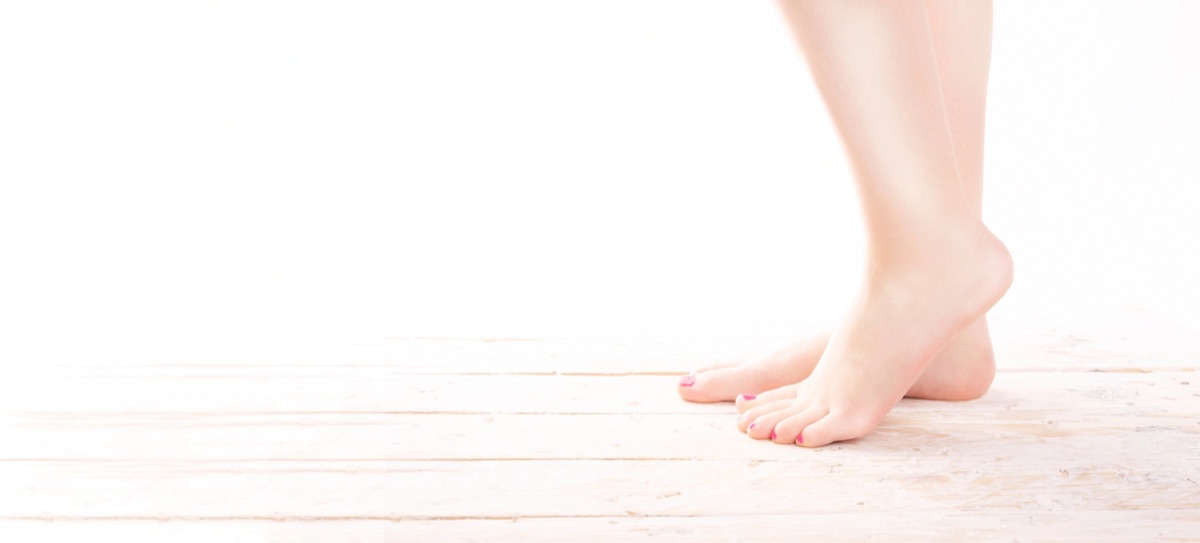
Short, calm, and with nothing to fear. We examine the foot sitting and standing, look if the arch appears when standing on tiptoes — the great sign of normality in flexible flat feet — and observe him walking and running. If more detail is needed, the gait analysis with 3D scanner is quick and not bothersome at all: many children even find it fun.
Often the visit does not end with a treatment: it ends with an explanation. Leaving the consultation knowing that your child’s foot is evolving normally is also a result, and a good one.
When flat feet in children do require attention
There are signs that make us look at it more closely: a rigid flat foot (the arch does not appear even on tiptoes), a flat foot on only one side, recurring pain, or a child who avoids running and playing because they get tired. None of these signs implies anything serious by itself, but they all deserve a calm examination.
And if the doubt is about an adult at home, the approach changes slightly: we explain it on the flat foot page.
How it feels
Symptoms
Low arch when bearing weight (very common in childhood)
Sometimes, fatigue or complaints when walking a lot
Irregular shoe wear
Why it happens
Causes and risk factors
In childhood, a certain degree of flat foot is **normal**: the arch forms over the years. The question is not "is the arch low," but whether there is pain, if it limits the child, or if it does not evolve as it should. Most cases only require follow-up.
At the clinic
How we diagnose it
01
Assessment
We examine the foot and observe the child's gait.
02
Follow-up
We monitor evolution over time, without intervening unless necessary.
Your options
Treatments
Each card links to the treatment page.
Custom insoles
Only when indicated, not as a routine.
See moreGait analysis
To assess gait with a reliable criterion.
See moreDon’t let it linger
When to see us
It is worth assessing if the child complains of pain, gets very tired while walking, the gait seems strange, or you simply want peace of mind. Often the conclusion is reassuring.
Muchas gracias a Laura, la podóloga del centro, ya no es un problema caminar sin dolor, 100% recomendado el centro.
Jose Antonio A. M. · Google review
Frequently asked questions
You may also like
Related conditions
Let’s take the first step together
We’ll explain your case, no commitment.