Diabetic foot
In diabetes, caring for your feet is prevention. We explain how we monitor you so that a small wound does not become complicated.
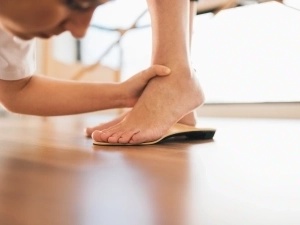
The full guide
What is it?
In summary: in diabetes, regular podiatric monitoring helps prevent most foot complications. It is not aesthetic: it is about detecting a small injury in time before it becomes complicated. We perform screening and monitoring according to your risk at any of our centers.
The diabetic foot is not a disease in itself, but the set of risks that diabetes poses for the feet: less sensitivity and less circulation. The result is that a small wound can go unnoticed and become complicated.
The good news: with regular podiatric monitoring, most of these problems can be prevented. The goal is to care for the skin and nails, offload pressure points, and detect any injury early.
Daily foot care when you have diabetes
The most important part of prevention does not happen in the consultation: it happens at home, every day. They are simple gestures that take a couple of minutes:
- Look at your feet every day: soles, heels, and between the toes. If you cannot reach well, use a mirror or ask someone at home for help.
- Wash and dry them well, especially between the toes: moisture favors cracks and fungi.
- Moisturize the skin of the heel and sole, but not between the toes.
- Do not cut calluses or use callus removers. On a foot with less sensitivity, they can cause an injury without you realizing it. Calluses are treated safely in the consultation, with chiropody.
- Check the inside of your shoes before putting them on: a small stone or a seam can cause a wound without you noticing.
- Cut nails straight and without shortening them too much. If it is difficult for you or you see changes — for example, an ingrown toenail starting — it is better that we resolve it.
Diabetic foot screening: what to expect
If you have diabetes, you have likely heard about diabetic foot screening — the periodic check-up also offered by the public health system. It is a good tool, and it is worth taking advantage of. However, it helps to understand what it is and what it is not: a preventive assessment that helps prevent complications because it detects them early. It is not a treatment, and no check-up can guarantee that nothing will ever appear: that is why the combination of screening and daily care is what truly makes a difference.
In our consultation, the screening reviews sensitivity, circulation, skin, nails, and pressure points. If we find areas that support too much load, we can offload them with custom insoles. And you leave with a clear plan: what to watch out for, when to return, and what to do if something changes.
Consistency, not fear
The message we want you to take away is not one of fear, but of routine. Complications of the diabetic foot do not appear overnight: they usually start with small things — a callus, a crack, a shoe that rubs — which with regular reviews are detected and resolved early.
Since 2005, we have been accompanying people with diabetes with this idea in mind: consistency is worth more than any specific treatment. Periodic review, daily care, and consulting without waiting when something changes. With this, your feet stop being a reason for concern to become, simply, one more thing you take good care of.
How it feels
Symptoms
Loss of sensation or tingling in the feet
Dry skin, cracks, or calluses that do not improve
Wounds that take a long time to heal
Why it happens
Causes and risk factors
Diabetes can reduce foot sensitivity (neuropathy) and circulation. This means a small injury can go unnoticed and become complicated. Therefore, monitoring is not "cosmetic": it is the prevention of serious problems.
At the clinic
How we diagnose it
01
Foot assessment
We check sensitivity, skin, nails, and pressure points.
02
Prevention plan
We establish a monitoring schedule based on your risk.
Your options
Treatments
Each card links to the treatment page.
Chiropody
Professional care of nails, calluses, and skin to prevent injury.
See moreCustom insoles
They offload pressure points where ulcers form.
See moreDon’t let it linger
When to see us
If you have diabetes, a periodic check-up is advisable even if you notice nothing. And consult without waiting if a wound appears, a callus changes, or you experience loss of sensation.
Muchas gracias a Laura, la podóloga del centro, ya no es un problema caminar sin dolor, 100% recomendado el centro.
Jose Antonio A. M. · Google review
Frequently asked questions
Let’s take the first step together
We’ll explain your case, no commitment.