Corns and calluses
The skin defends itself against pressure by hardening. We remove corns or calluses painlessly and, most importantly, look for the cause so they do not return.
The full guide
What is it?
In summary: a corn and a callus are the skin’s way of protecting itself from pressure or repeated friction. A corn is usually smaller and deeper, whilst a callus tends to cover a more extensive area, but both have a mechanical origin. They are not dirt or an infection, although they can become very painful.
We remove them painlessly using chiropody and, above all, we look for the cause. A toe deformity, unsuitable footwear, or a way of walking that concentrates too much load can cause the lesion to return. The aim is not only to remove the hardened skin, but to reduce the pressure that caused it. In Martorell.
A corn (or heloma) and a callus (or hyperkeratosis) are the same mechanism on a different scale: the skin thickens to defend itself against friction or pressure. A corn usually presents a core of hard skin that pushes inwards and can cause highly localised pain, like a sharp prick, especially when walking or pressing on the area.
The callus is more common on the sole, the heel, or the weight-bearing areas of the toes. It can cause a sensation of burning, tiredness, or discomfort when walking, but sometimes it produces no symptoms. It can also appear on the top or side of the toes, particularly when these rub against the shoe.
Why they appear (and why they return)
Behind a callus that always returns there is almost always a mechanical cause: a bunion causing the toe to push against the shoe, claw toes that rest poorly, or a way of walking that overloads a specific point on the sole. Narrow shoes, internal seams, inflexible soles, or activities that increase pressure on a specific area can also contribute.
Over the years, certain deformities of the toes or forefoot can worsen and change the way weight is distributed. In other cases, the cause is a functional overload with no obvious deformity. This is why it is not enough to assess only the skin: it is also necessary to observe how you bear weight, how you walk, and which points support the most load.
As long as this pressure remains, the skin will harden again. Removing the lesion can relieve the pain, but it does not always prevent it from reappearing. When the callus is recurrent, very painful, or interferes with walking, it is advisable to investigate its origin.
How we assess it in the clinic
We begin with a conversation about the pain, how long you have had the lesion, the shoes you wear, and whether it has reappeared after previous treatments. Next, we examine the foot and observe the location, shape, and depth of the hardening. We also check for deformities, areas of inflammation, wounds, or signs that might suggest another problem.
Depending on the case, we can complete the assessment with an ultrasound, an X-ray, or a gait analysis. An X-ray can help to visualise the relationship between the bones and certain deformities. An ultrasound is useful when soft tissues need to be assessed or to differentiate a superficial lesion from other causes of pain. Gait analysis allows us to analyse how loads are distributed during standing and walking.
Not all hardened skin is necessarily a corn. Some warts, fissures, inflammatory lesions, or other skin alterations can look similar. If the diagnosis is unclear, if it bleeds, or if the lesion changes, it needs to be examined before applying any product.
What we can do
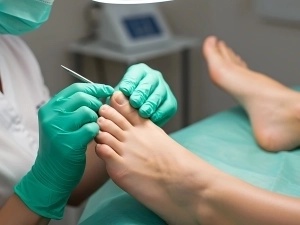
When the lesion is superficial and the cause does not generate significant overload, chiropody allows us to remove the excess skin in a controlled manner and relieve the pressure. We then explain how to protect the area and what changes can reduce friction, such as using wider footwear or avoiding seams and rigid toes.
If there is a deformity or an inadequate distribution of loads, we can propose measures to offload the affected point. These often involve adapting footwear, using protectors, or considering custom orthotics. These options do not make sense for everyone: they depend on the examination and the specific cause.
When the corn or callus reappears despite conservative measures, or when the deformity causes pain and limits daily life, surgical correction may be considered. The operation is not decided solely because there is a callus, but to treat the alteration that maintains the pressure. We will explain the aim, the alternatives, and the possible risks before making a decision.
What not to do at home
Pharmacy plasters and acidic liquids act blindly: they do not distinguish the lesion from healthy skin and, in feet with diabetes or poor circulation, they can result in a wound. Cutting a corn off with a blade is not a good idea either, as it can cause a wound, an infection, or difficult-to-control bleeding.
Do not try to remove a painful area if you are not sure what it is. Book an appointment if you have diabetes, circulation problems, loss of sensation, a wound, redness, or discharge. Also if the pain makes you walk differently, if the lesion returns frequently, or if it does not improve with a change of footwear.
If it hurts or always comes back, it is best to have a consultation: we will remove it properly and explain how to prevent it from appearing.
How it feels
Symptoms
Area of thickened, hard skin, often on the sole or toes
Pain upon pressure or walking, as if stepping on a small stone (corn)
Yellowish skin or with a deeper, sensitive central core
Why it happens
Causes and risk factors
Corns and calluses are not a skin disease, but the skin's response to repeated pressure or friction: a toe rubbing against the shoe, a deformity such as a bunion or claw toes, or a way of walking that overloads a specific point. That is why removing the lesion without correcting the cause is a short-lived solution.
At the clinic
How we diagnose it
01
First visit
We differentiate the corn from the callus and other lesions (wart).
02
Origin of pressure
We look for the deformity or overload that causes it.
03
Gait analysis
If the cause is biomechanical, we assess how to distribute the load.
Don’t let it linger
When to see us
If the corn hurts when walking, always returns in the same place, or if you have diabetes or poor circulation, it is worth having it assessed by a podiatrist rather than manipulating it at home.
Un trato excelente de todo el personal y muy profesionales.
Rocío G. C. · Google review
Frequently asked questions
You may also like
Related conditions
Ingrown toenail
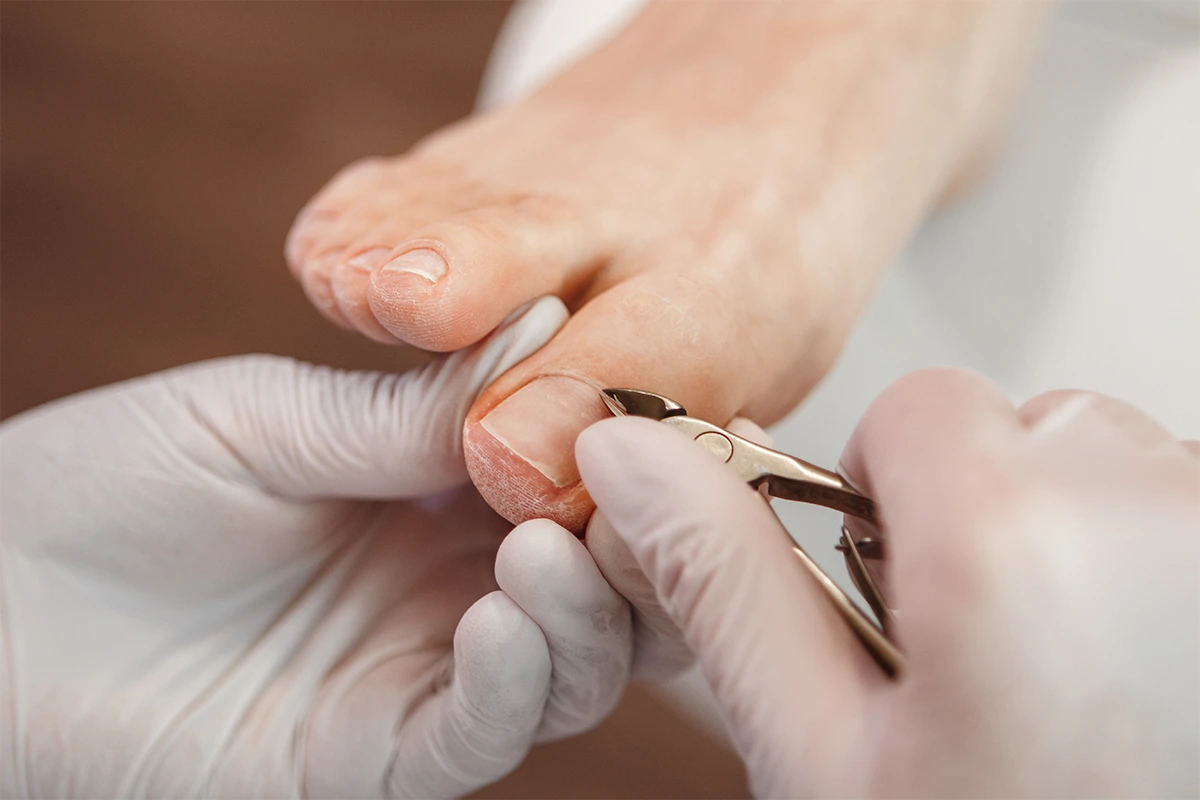
Ingrown toenails have a definitive solution. We explain how we treat them to prevent recurrence.
See more
Toenail fungus (onychomycosis)
Thickened, yellow, or brittle nails. We explain how we confirm if it is fungus and how we treat it.
See morePlantar warts (papillomas)
Papillomas are stubborn, but with the right treatment and consistency they can be cured. We explain how.
See moreLet’s take the first step together
We’ll explain your case, no commitment.