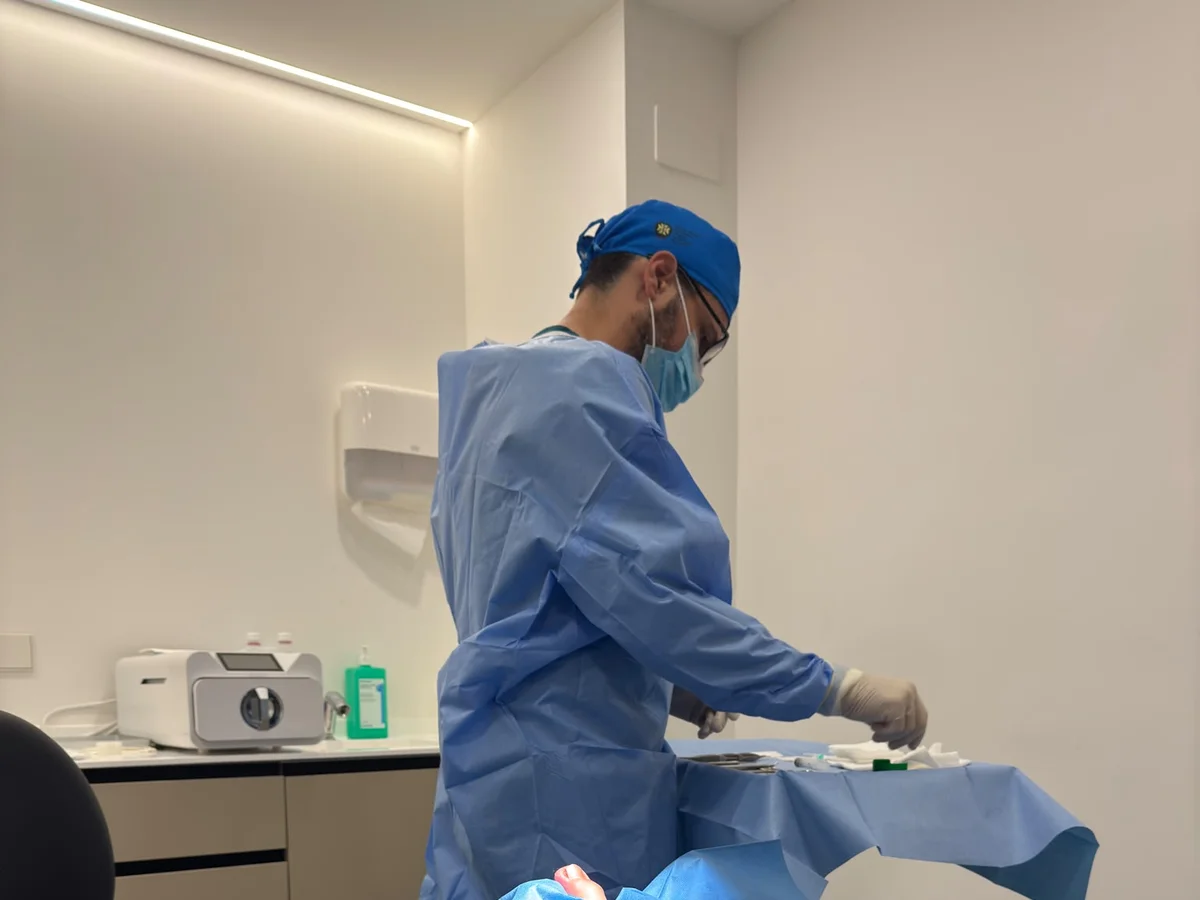
Step by step
How the process works
Assessment
We confirm that you are a candidate for surgery and explain the procedure to you.
In-office procedure
Local anesthesia to the toe and treatment of the nail edge. About 30-40 minutes in total.
Care and follow-up
You walk out the same day. Simple care at home and check-ups until discharge.
Your case
Wondering if this treatment is right for you? We’ll assess it, no strings attached.
Tell us what you’re feeling and we’ll tell you the next step — no rush, no pressure.
Un trato excelente de todo el personal y muy profesionales.
Rocío G. C. · Google review
The full guide
What it involves
In summary: when an ingrown toenail recurs, treating only the spike is simply buying time until the next episode. Nail surgery acts on the root of the border that is digging in: local anaesthetic, half an hour in the clinic, and you walk out the same day.
An isolated ingrown toenail can be resolved conservatively in a podiatry clinic. But when the same toe becomes infected or digs in time and time again, the problem is no longer just the episode: it is that the shape of the nail, its root or its bed causes it to grow into the flesh again.
This is where nail surgery can offer a lasting solution: selectively removing the border of the nail that digs in and treating its root, known as the matrix, so that this part does not grow back with the same shape.
The aim is not simply to cut the painful nail. It is to understand why it digs in and act on the area that produces it. Before making a decision, we assess the state of the toe, the intensity of the inflammation, possible signs of infection, the shape of the nail and your general health.
What the procedure is like (no mysteries)
It is minor surgery performed in the clinic, under local anaesthetic to the toe, without going to theatre or being admitted. In the most common technique — partial matricectomy with phenol — only the lateral sliver of the nail that digs in is removed, and the portion of the matrix that generated it is treated.
Before starting, we examine the toe and explain what we will do, which part of the nail we will remove and what the aftercare will involve. We also discuss the alternatives, the expected benefits and the limitations. If there is a severe infection or any circumstance that makes it advisable to wait, we prioritise getting that situation under control first.
The local anaesthetic is administered at the base of the toe. You may feel the prick for a few moments, but the area then goes numb. During the procedure you may feel pressure, touch or manipulation, but you should not feel pain. If you feel any discomfort, you must tell us: we can check the effect of the anaesthetic before continuing.
The whole process takes about 30-40 minutes, most of which is preparation. You do not have to look if you do not want to, the entire nail does not need to be removed, and you walk out with a dressing and comfortable footwear. It is usually preferable to wear a wide or open shoe that does not compress the toe.
In the following days, the care is straightforward and we will give you written instructions on how to carry it out. It is normal to experience some sensitivity, local inflammation or slight discharge as part of the healing process. The discomfort is usually manageable, especially if you keep the foot protected and avoid unnecessary pressure. We do not give standard medication guidelines: if necessary, instructions are tailored to your case.
Follow-up appointments allow us to check that the wound is healing correctly and to resolve any doubts. The wound is small, but it needs time to heal. Your return to normal life depends on your activity, the toe treated and how it progresses. Many people can walk from day one, but it is advisable to avoid sport, swimming pools, tight footwear or activities that put pressure on the area until we indicate otherwise.
What a matricectomy is and how it is performed
The nail matrix is the area located at the root, under the skin and behind the visible part of the nail. It is the tissue that produces the nail plate. Therefore, if we only cut the border that digs in but leave its matrix intact, this border can grow back in the same direction and repeat the problem.
A partial matricectomy involves treating only the lateral part of the matrix corresponding to the affected border. In this way, the nail becomes slightly narrower, but retains most of its width and a generally natural appearance. This is the technique often considered when the problem is localised to one or two margins.
A total matricectomy involves treating the entire matrix. Consequently, the entire nail plate stops growing. It is not the first option for most ingrown toenails, but it may be considered in specific situations, such as a very extensive deformity, complex recurrences or when the overall shape of the nail causes a persistent problem. We will always explain what aesthetic and functional changes you can expect.
In the chemical technique with phenol, after removing the portion of the nail that digs in, this agent is applied to the selected part of the matrix. The phenol acts locally to prevent that small area from continuing to produce a border that grows towards the skin. It is not about removing the entire nail, but rather interrupting the growth of the responsible part in a controlled manner.
The selection of the technique depends on the shape of the nail, the location of the problem, recurrences and your state of health. Treating the root is what reduces the risk of the border growing back and digging in, but no procedure can guarantee that there will never be a new episode of discomfort. It is also possible for the nail to change slightly in width or appearance.
Why treating the “root” makes the difference
Cutting the spike relieves the pain today; if the matrix continues producing a nail that curves into the flesh, the problem can return in weeks or months. By treating the matrix of the affected border, we aim to prevent the same mechanism from recurring. This is why matricectomy is a common option for recurrent ingrown toenails.
And a nuance we always assess before operating: why this nail digs in. Tight footwear, a particular way of cutting it, or a nail thickened by fungi can be the trigger. A highly curved shape, trauma, repeated pressure or an altered growth pattern can also contribute.
Surgery treats the responsible border, but prevention remains important. Once the wound allows it, we will explain how to cut your nails, which footwear is most suitable and what signs should prompt you to seek a consultation. Correcting these factors helps protect the operated toe and prevent problems in the other toes.
Who is a good candidate
- Ingrown toenail that has recurred twice or more on the same toe.
- Episodes with infection or granuloma, the “proud flesh” at the edge.
- Nails with a highly curved, involuted or pincer shape that dig in due to their anatomy.
- Pain or inflammation that interferes with walking, working or wearing footwear.
- Situations where conservative measures have not resolved the problem or the nail continues to dig in.
There is no need to wait until the pain is unbearable. A timely assessment allows us to confirm whether it is indeed an ingrown toenail, rule out other causes and discuss all the options calmly. In some cases, continuing with conservative treatment is sufficient; in others, matricectomy may be the most sensible recommendation.
In people with diabetes or circulatory problems, the procedure is also possible, but the prior assessment is more thorough — in the diabetic foot, no wound is trivial, and monitoring is much closer. We also take into account the treatments you are taking, your healing history, allergies and any problems that may influence the anaesthetic or your recovery.
If you have any doubts, we will explain what will happen before, during and after the procedure. The decision is made together, with clear information and without rushing, so that you understand the procedure and choose the most suitable option for your foot.
Common questions
Frequently asked questions
Let’s take the first step together
We’ll explain your case, no commitment.