Step by step
How the process works
Assessment
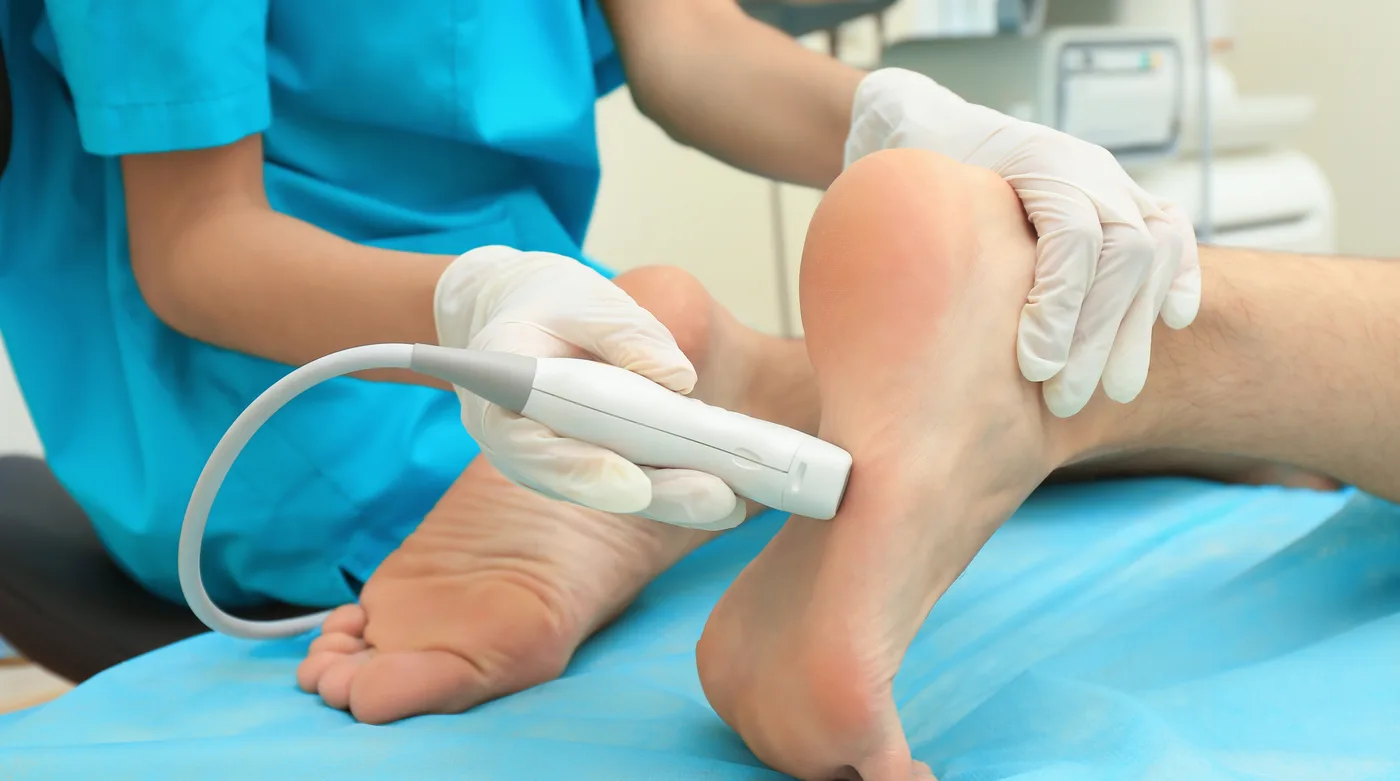
We review your history, examine your foot and use ultrasound to confirm that your tissue is a suitable candidate. If it is, we explain which treatment we propose and why.
Ultrasound-guided application
We prepare the PRP from a small sample of your blood, or the hyaluronic acid, and deposit it at the exact point of the injury, watching in real time on the ultrasound.
Follow-up
We give you the guidelines for the following days, reassess how the tissue responds and combine it with orthotics or exercise if needed.
What we work with
Technology we use
Objective diagnosis, not guesswork: this is the equipment we use to work on your case in Martorell.
Discover all our technologyYour case
Wondering if this treatment is right for you? We’ll assess it, no strings attached.
Tell us what you’re feeling and we’ll tell you the next step — no rush, no pressure.
Un trato excelente de todo el personal y muy profesionales.
Rocío G. C. · Google review
The full guide
What it involves
In short: regenerative treatments — PRP (platelet-rich plasma) and hyaluronic acid — stimulate the repair of your own tissue in stalled injuries and joint wear, without surgery or time off work. We always apply them with ultrasound guidance, at the exact point of the injury.
Unlike an anti-inflammatory, which calms the symptom, the goal here is to help the tissue recover. PRP is obtained from a small sample of your own blood and delivers a high concentration of growth factors to the injury; hyaluronic acid lubricates and improves the environment of the injured or worn tissue.
What exactly is PRP
PRP stands for platelet-rich plasma. Platelets are blood cells that, in addition to helping close wounds, release substances — growth factors — that signal the body to repair a tissue.
To prepare it, we draw blood similar to a blood test. The sample is processed in the same clinic to separate the part richest in platelets, and this concentrate is what is applied to the injury. Because it comes from your own blood, the body recognizes it as its own.
And hyaluronic acid?
Hyaluronic acid is a substance the body already produces and which is part of the fluid that lubricates joints and helps tendons glide. With wear or a long-standing injury, this environment deteriorates and movement becomes more painful.
Applied to the joint or around the tendon, hyaluronic acid helps restore this gliding and reduce friction. It does not replace PRP: each has its own indications, and sometimes they are combined. At the assessment we explain which one suits you and why.
When a regenerative treatment makes sense
The typical candidate has spent months with an injury that will not quite heal: a stubborn plantar fasciitis, the pain associated with a heel spur or a chronic Achilles tendinopathy. They have already tried rest, stretching or anti-inflammatories with little result.
In joint wear — ankle, big toe — hyaluronic acid can improve pain and function in early and intermediate stages, and help postpone more aggressive options.
They are not for everyone, and we do not recommend them out of inertia: at the assessment we locate the injury with ultrasound, honestly tell you whether your tissue is a good candidate and give you a fixed quote before starting.
Why always with ultrasound
A regenerative treatment is worth as much as its precision: depositing PRP or hyaluronic acid a few millimetres beyond the target tissue reduces its effect. That is why all our applications are ultrasound-guided injections: ultrasound lets us see the needle and the injury in real time.
What a session is like
- Before: you do not need to come fasting or do any special preparation. If you take any medication, especially anti-inflammatories or anticoagulants, let us know at the assessment and we will tell you if any adjustment is needed.
- During: we locate the injury with ultrasound, disinfect the area and perform the application with a fine needle, watching it on the screen at all times. If it is PRP, we first draw the blood and prepare the concentrate during the same visit.
- After: you leave walking and can go about your normal life. It is common to feel the area somewhat loaded or sensitive for one or two days: this is part of the tissue’s response and goes away on its own.
What you can expect, and when
Regenerative treatments do not work like a painkiller: they do not aim to switch off the pain instantly, but to give the tissue the push it needs to repair itself. That is why improvement is usually gradual and noticed over the following weeks, not the next day.
Not all tissues respond the same way, and sometimes more than one application is needed. That is why we do follow-up: we review how the injury is evolving and, if necessary, adjust the plan. We prefer to tell you things clearly from the start rather than promise results we cannot guarantee.
After the application
- Do relative rest for the first few days: you can walk and work, but set aside sport and intense exertion until we authorize them again.
- If you feel discomfort, you can apply local cold for a few minutes. Before taking any anti-inflammatory, check with us: in some treatments it is best to avoid them in the following days.
- Return to activity gradually, following the guidelines we give you.
- If you notice anything unexpected, such as pain that increases instead of decreasing, redness or fever, call us.
The treatment is one part; the cause, the other
As with everything we do since 2005, the regenerative treatment addresses the tissue, but not the reason it became injured. If the cause is mechanical — a gait pattern that overloads the heel or the tendon — we combine it with custom orthotics or an exercise program so the improvement lasts when you return to your usual activity.
Common questions
Frequently asked questions
Let’s take the first step together
We’ll explain your case, no commitment.