Finding the best footwear for plantar fasciitis is one of the first things everyone does when the heel starts to hurt. And it makes sense: the shoe is the environment where your fascia works ten thousand steps a day. But be careful with the approach: there is no such thing as a shoe that cures; there is a shoe that stops making it worse.
Plantar fasciitis does not depend solely on impact. The time you spend standing, the activity you do, ankle mobility, calf strength and the way your foot bears weight also play a part. That is why a shoe that one person finds comfortable may be unsuitable for another. The main criterion is how your foot responds, not the name or price of the model.
Here are the requirements that truly matter, without brand names or fluff, and the point at which footwear falls short.
The four requirements that matter
First: real heel cushioning. An irritated fascia appreciates the impact being filtered; thin, hard soles deliver it in full. The cushioning does not need to be overly soft: an excessively soft sole can also make the foot work harder to stabilise itself. Look for a feeling of protection, but also of control.
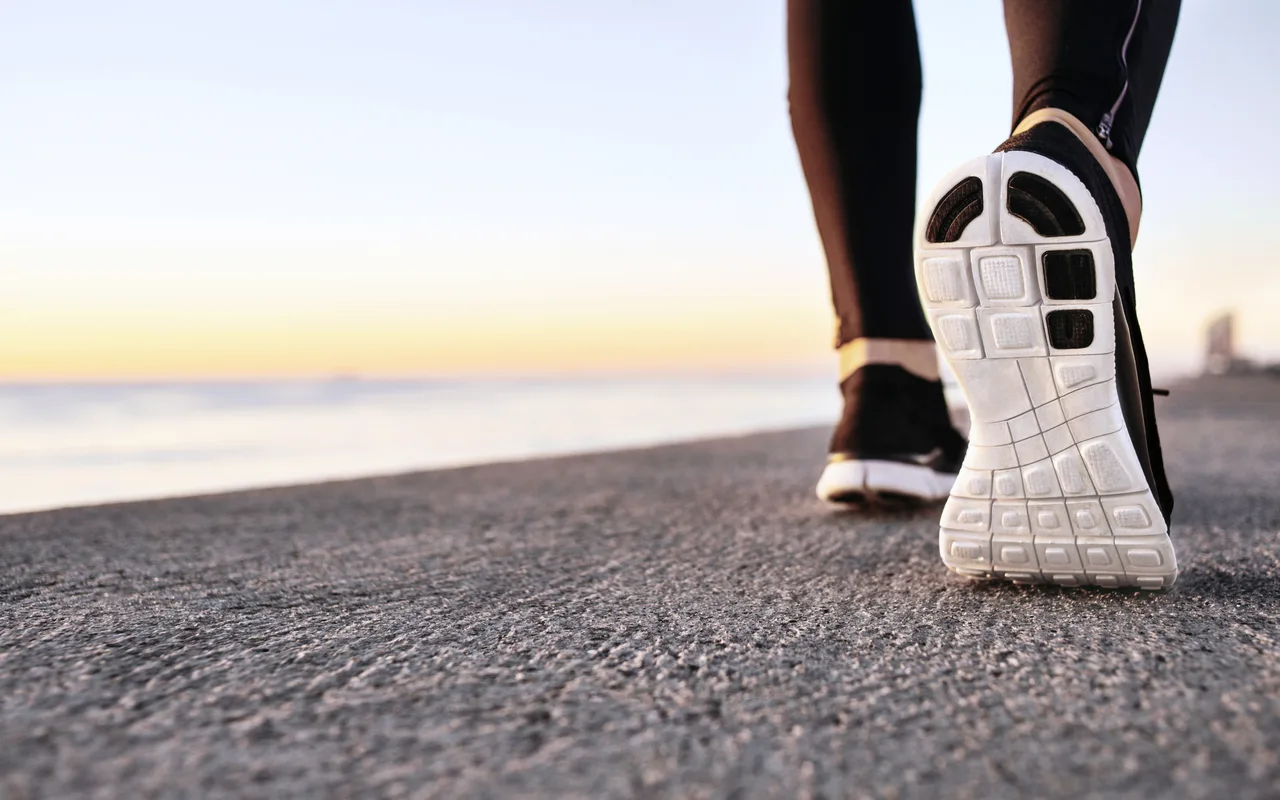
Second: a slight gradient between the heel and the toe (drop). Raising the heel by a few millimetres relaxes the tension that the calf and Achilles tendon transmit to the fascia. This is why completely flat footwear often feels worse during the acute phase. However, there is no need to chase a specific drop as if it were a universal recipe. If you suddenly switch from a high shoe to a flat one, you can also strain the calf and the Achilles tendon.
Third: a firm heel counter. The piece surrounding the heel must hold it in place, not bend like a sock. Practical test in the shop: try to squash the heel counter with your thumb; if it gives way completely, discard it. Firmness does not mean it should rub or press against the tendon. If your heel slips with every step, adjust the laces or try a different shape.
Fourth: torsional rigidity. Hold the shoe at the toe and heel and try to twist it like a cloth: it should resist in the middle and bend only where the toes bend. A shoe that twists entirely forces your arch to act as the structure.
It is also important that the sole bends at the metatarsal area, not right in the middle. And that the shoe is not deformed from wear: a sole worn down on only one side can alter your load even if the original model was suitable.
What to set aside while it hurts
Minimalist footwear and flat, thin-soled slippers have their audience and their moment, but the painful phase of plantar fasciitis is not that moment. The same applies to flat flip-flops, paper-thin ballet pumps and traditional canvas plimsolls.
Nor is it the time to start wearing high heels every day: it shortens the posterior chain and, when you take them off, the fascia receives a sudden pull. If you wear them for work, alternate heights and compensate with stretching.
Also avoid walking for long periods in shoes that make you compensate. A trainer might seem comfortable at first, but if your foot moves inside it, if the big toe cannot function properly, or if the sole folds too early, the pain may appear after a while. The test is not just how you feel when putting them on, but how your foot responds after walking in them.
If you now want to return to more flexible or minimalist footwear, do so when you are stable and in a progressive manner. Do not combine it straight away with long hours standing, a hike or an intense training session.
You play the game at home too
A mistake we see every week: impeccable footwear on the street and barefoot on ceramic tiles the rest of the day. During the painful phase, the home counts too: a house slipper with a cushioned sole or a sandal with support makes a difference, as noted in the MedlinePlus care guidelines. To expand with an independent source, consult foot injuries and disorders (MedlinePlus).
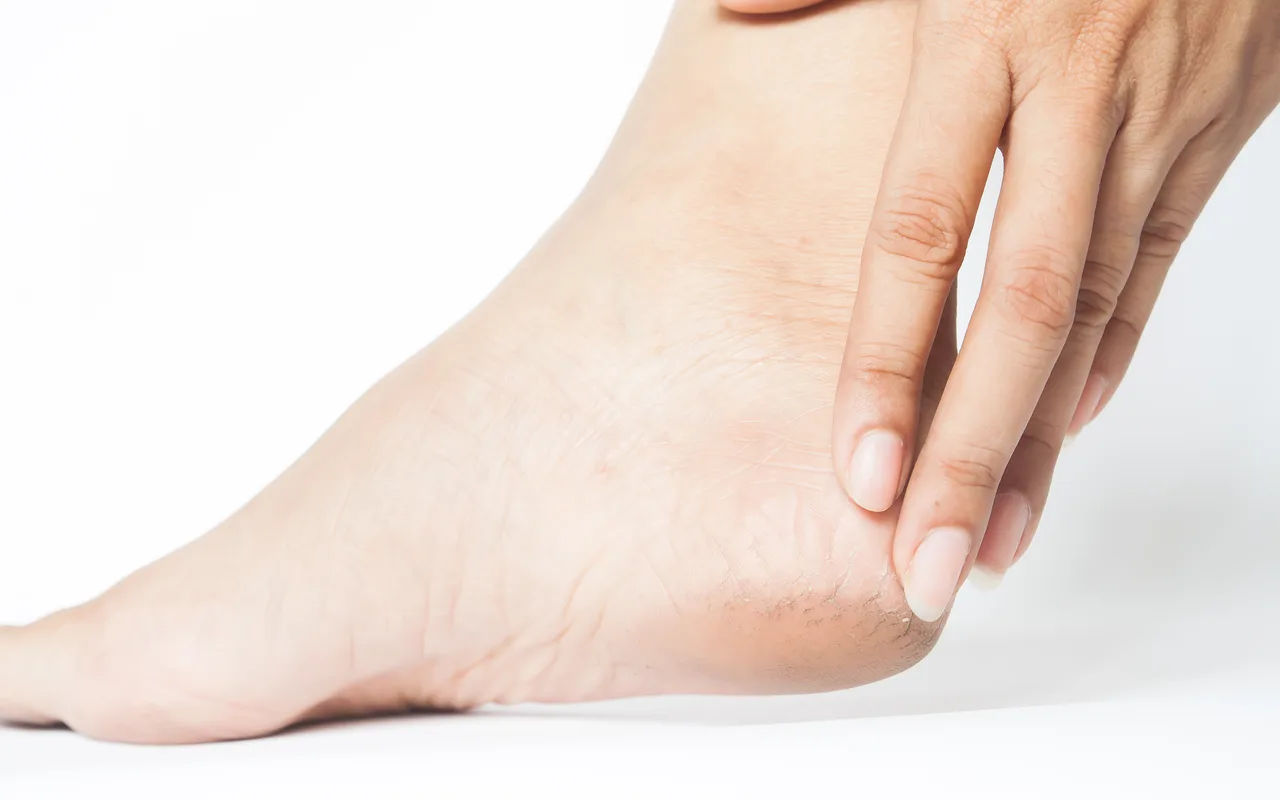
There is no need to wear a rigid shoe on the sofa or immobilise the foot. The idea is to avoid unnecessary impacts during the moments when you accumulate the most steps: cooking, walking up and down, playing with the children or taking out the rubbish. If it only hurts barefoot when you get up, you can leave the footwear ready next to the bed and put it on before taking your first steps.
The same logic applies to the gym: doing strength training barefoot or in flat footwear while the heel is irritated is adding pulls to a tissue that is asking for a truce. You can temporarily adapt the exercises, reduce the time spent standing, and avoid jumping or running if they trigger pain. Adapting does not mean stopping moving.
When the shoe is not enough: the insole
Footwear provides a favourable generic environment. But if your fasciitis stems from a specific biomechanics —an arch that collapses, excessive pronation, a leg that bears more weight than the other— no off-the-shelf shoe corrects this: it is manufactured for an average foot that is not yours.
This is where the gait analysis finds the cause and custom insoles correct it inside any reasonable footwear. The correct shoe plus a custom insole is the combination we see working every day.
An insole should not cause intense pressure, numbness or new pain. The first few days may require progressive adaptation, especially if it alters the way you bear weight. It is also necessary to check that the shoe has enough internal volume and that the original insole can be removed when necessary. Putting it inside a narrow shoe can worsen the problem even if the design is correct.
How to try on footwear if you have fasciitis
Go shopping in the afternoon: the foot is slightly more swollen and it is the real-life scenario of your worst hours. Wear your usual socks and, if you use insoles, bring them along to the test — a perfect shoe without an insole might be too tight with it inside.
In the shop, apply the two manual tests: squashing the heel counter and twisting the sole. Then walk properly, not just three polite steps: look for a hard surface if there is one and pay attention to the heel during the gait cycle. Immediate discomfort on impact is a no, no matter how lovely the shoe is.
Check that there is space in front of the toes and that the foot does not slide forwards. The toes should be able to move without hitting the toe box, but there should not be so much extra space that the heel slips. Also try the stairs and some gentle turns: a shoe might seem perfect when walking straight but prove unstable when you change direction.
Last filter: the shape must respect your forefoot. A shoe that cushions wonderfully but crushes your toes simply moves the problem from one place to another.
Do not be guided solely by the feeling of initial comfort. A very soft foam might feel nice for a few minutes and, instead, tire you out later. If you have the option to exchange them, keep the receipt and test the footwear on a clean surface at home for a while.
And for work? The case of standing for hours
If your working day involves standing for eight hours —healthcare, hospitality, retail, factory— work footwear weighs more heavily on your fasciitis than walking shoes. The same rules apply, with an extra demand on cushioning, and with rotation if possible: two alternating pairs distribute material and foot fatigue better.
With mandatory safety footwear, the margin of choice decreases, and here the custom insole becomes almost essential: it is the way to incorporate correction and cushioning inside a boot that you cannot change. Mention this during your assessment; insoles are designed with the actual shoe they will live in mind.
And a golden workplace rule: the floor also counts. Concrete and ceramic tiles transmit every impact; if you can choose where you stand (an anti-fatigue mat in a fixed spot, for example), your heel will notice the difference.
Try to vary your posture, take short breaks and walk for a few minutes when possible, rather than remaining still for a very long time. Prolonged stillness can put more strain on the exact same spot. If footwear is mandatory and causes you pain, do not modify it yourself: it is first necessary to ensure that any change continues to meet safety requirements.
Fasciitis is not cured just by buying
A good shoe takes fuel away from the fire, but the fire is put out by treating the tissue: stretching and strengthening every day. We have the complete routine in the guide of exercises for plantar fasciitis, and if your pain is the classic morning stabbing sensation, you will be interested in understanding why the heel hurts upon waking up.
Improvement tends to be gradual. Do not evaluate the treatment solely on a good or bad day: observe if you can walk more, if the pain of the first step lasts less time and if you recover better after activity. If a new shoe clearly increases discomfort, pause wearing it even if it meets all the requirements on paper.
Seek consultation if the pain is severe, if it has appeared after trauma, if there is marked inflammation, tingling or loss of sensation, or if it is not evolving as you expected. Not all heel pain is plantar fasciitis, and getting the name right is the first step to choosing the right treatment.
Have you been rotating shoes for weeks with no results? That is the typical sign that the cause is not in the shoe. An in-clinic ultrasound and a look at your gait usually clarify in a single visit what months of shopping have not resolved.