An ingrown toenail occurs when one of the edges of the nail, often on the big toe, grows into the surrounding skin. At first it may cause mild discomfort, but it can also progress with inflammation, discharge, bleeding, or infection. In many cases it improves with simple measures; in others, nail surgery is the best option to resolve the problem more permanently.
The question “ingrown toenail: when is surgery needed?” has no single answer. The intensity of symptoms, the condition of the skin, footwear, medical history, and whether the problem keeps recurring all need to be considered. In this article we explain when surgery for an ingrown toenail is considered, what matricectomy involves, and what you can expect from recovery.
When home remedies are no longer enough
In an early stage, it may help to wear wide footwear, keep the feet clean and dry, avoid manipulating the edge of the nail, and cut the nail straight across without excessively rounding the corners. These measures do not replace an examination, but they can help when the discomfort is mild and there are no signs of infection.
If you want to learn about basic care, you can consult our guide on home remedies for ingrown toenails. However, it is important not to try to lift the nail with objects, deeply trim the edge, or apply irritating products without indication. These practices can further damage the skin or make later assessment more difficult.
Surgery may be considered when pain persists despite proper care, the inflammation does not subside, or there are repeated episodes. It may also be appropriate if the edge of the nail digs in deeply, granulation tissue appears, or infections keep coming back time and again. In these cases, continuing with only temporary care can prolong the problem.
You do not need to wait until the pain becomes unbearable. An ingrown toenail that limits walking, playing sports, or wearing normal footwear already justifies a visit. The ingrown toenail pathology must be distinguished from other problems, such as a skin infection, trauma, or onychomycosis, which require a different approach.
Signs that indicate a professional assessment is needed
Request an appointment if you notice spreading redness, local heat, significant swelling, discharge, bad odour, repeated bleeding, or a wound that is not healing well. Fever or general malaise are reasons to seek medical attention promptly. Do not try to drain the area or cut it yourself.
It is also advisable to consult promptly if you have diabetes, poor circulation, altered sensation, immunosuppression, or a history of poor healing. In people with diabetic foot, a wound on the toe can become complicated without causing much pain. You can find more information in this guide on signs and care of the diabetic foot.
A professional assessment makes it possible to determine whether there is an active infection, whether the edge of the nail is responsible for the symptoms, and whether there are factors that favour recurrence. Sometimes the problem is not only the shape of the nail: incorrect trimming, tight footwear, trauma, excessive sweating, or a toe deformity can also play a role.
Health sources describe the ingrown toenail as a common problem that can be related to inappropriate pressure on the edge of the nail. You can consult this general information on ingrown toenails and their symptoms.
What does ingrown toenail surgery involve?
The most common procedure does not necessarily involve removing the entire nail. Often only the edge that digs into the skin is treated and, if indicated, the corresponding part of the nail matrix. The matrix is the area that produces the nail. When this part is treated, we speak of matricectomy.
The aim is to prevent the problematic edge from growing back into the skin. The amount of nail removed depends on the extent of the problem and its cause. In some cases a partial matricectomy is performed; in specific situations a more extensive treatment may be considered. This decision is explained after examining the toe.
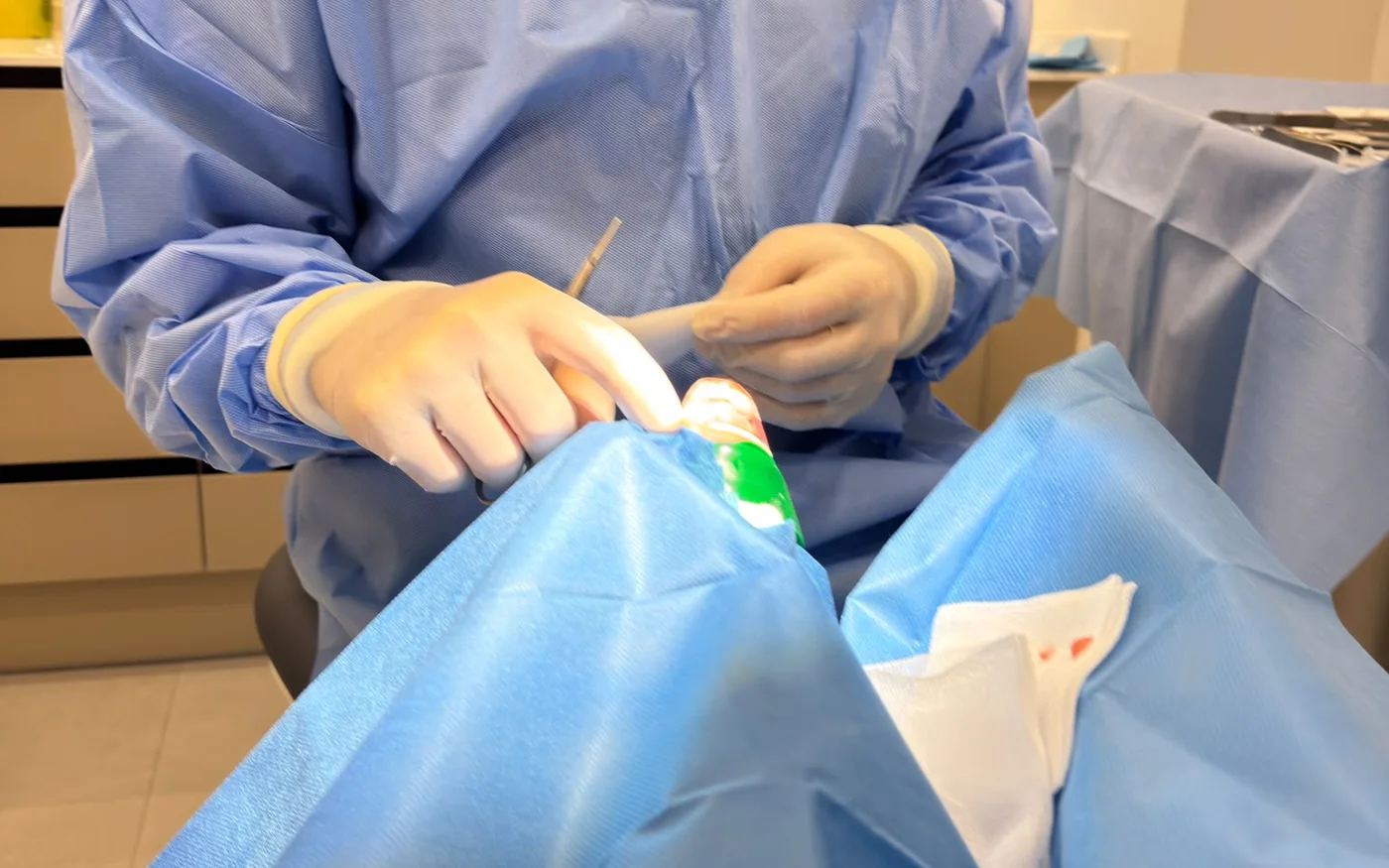
Nail surgery is usually performed under local anaesthesia. First the toe is numbed and the area is prepared. Then the fragment of nail causing the pressure is removed and the selected part of the matrix is treated using the indicated technique. Finally, the wound is protected with a dressing.
It is a procedure that is generally performed on an outpatient basis. This means it does not usually require a hospital stay, but it does not mean it should be done without a clear indication. Before the intervention it is important to review medication, allergies, medical history, circulation, and possible infections.
The technique is not the same for everyone. If there is a toe deformity, trauma, a very thick nail, or an associated infection, the plan may vary. The professional will also explain whether the inflammation needs to be treated first or whether the procedure can be done in the same visit.
What is recovery like after the operation?
Afterwards, the toe is usually protected with a dressing. During the first few hours it can help to keep the foot elevated and avoid walking more than necessary. You will need to follow the instructions on hygiene, wound care, and dressing changes, as the wound needs a clean and controlled environment.
Post-operative discomfort varies from person to person and depends on the procedure. There may be sensitivity, some inflammation, or slight discharge that is part of healing. If the pain clearly increases, the redness spreads, pus appears, you have a fever, or the wound worsens, contact the professional who treated you.
During recovery, choose open or very wide footwear that does not compress the toe. Avoid running, jumping, swimming, or activities that dirty or wet the wound until you are told it is safe. Returning to work depends on whether you sit, walk a lot, or wear safety footwear.
Do not pull off scabs, do not remove the dressing early, and do not apply antibiotics, antiseptics, or other products unless recommended. Wound care must be individualised. It is also important to attend follow-up visits, as they allow the progress to be checked and the treatment adjusted if necessary.
How to reduce the risk of it becoming ingrown again
Prevention starts with cutting the nails straight across, without leaving them too short or digging into the corners. Do not try to give them a very rounded shape following the contour of the toe. If you have difficulty doing this or your nails are very thick, podiatry treatment can help you maintain them properly.
Footwear also plays an important role. Use shoes with enough width and height in the toe area. Tight footwear, hard toe boxes, and repeated pressure can favour inflammation of the nail edge. If you play sports, check that your trainers do not press on your toes, especially on downhill sections or activities with sudden stops.
Keep your feet clean and well dried, especially between the toes. Change your socks if they are damp and watch for small wounds after a knock or intense activity. If you have a nail that often becomes ingrown, do not wait for the pain to go away on its own: early intervention can prevent repeated episodes, provided the professional considers it appropriate.
Recurrence can also be related to the natural shape of the nail, the surrounding skin, or other mechanical factors. That is why the goal is not only to remove the fragment that hurts, but to understand why it happened. A good explanation of post-operative care and nail trimming is an essential part of the treatment.
If you have doubts about whether your ingrown toenail needs surgery, at Serven Clinics we can assess your case and explain the options prudently. You can request an appointment through our contact page.