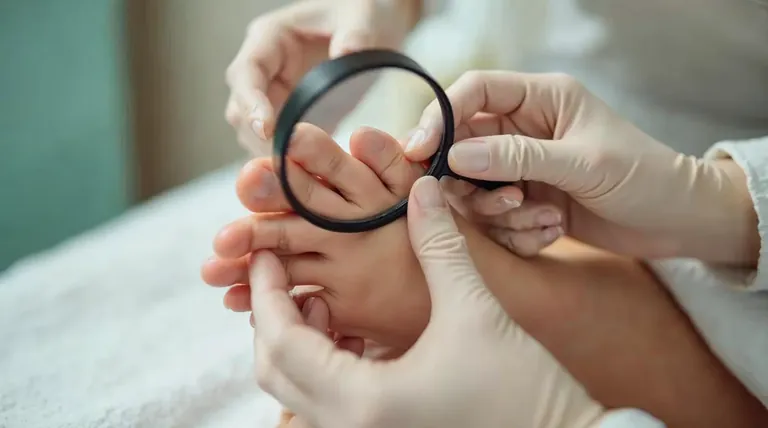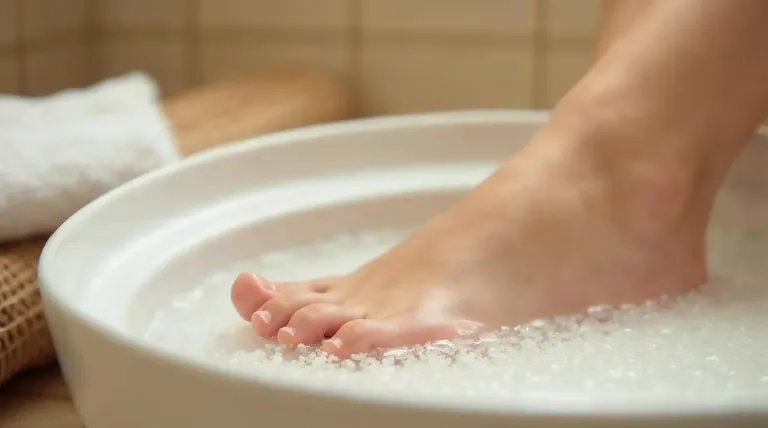
With an ingrown toenail that is just starting —discomfort at the edge, some redness, no pus— the right home remedies can halt the problem. With a nail that is already infected or recurs every month, they only delay the solution. The key is knowing which stage you are at and not crossing the line into “bathroom surgery”.
Let’s look at what helps, what makes it worse, and the signs that it is no longer suitable for home treatment.
What does help in the initial stage
The classic approach works: foot baths with warm water and salt, 10-15 minutes, two to three times a day. They soften the skin at the edge, reduce inflammation, and keep the area clean. Dry thoroughly afterwards, especially between the toes.
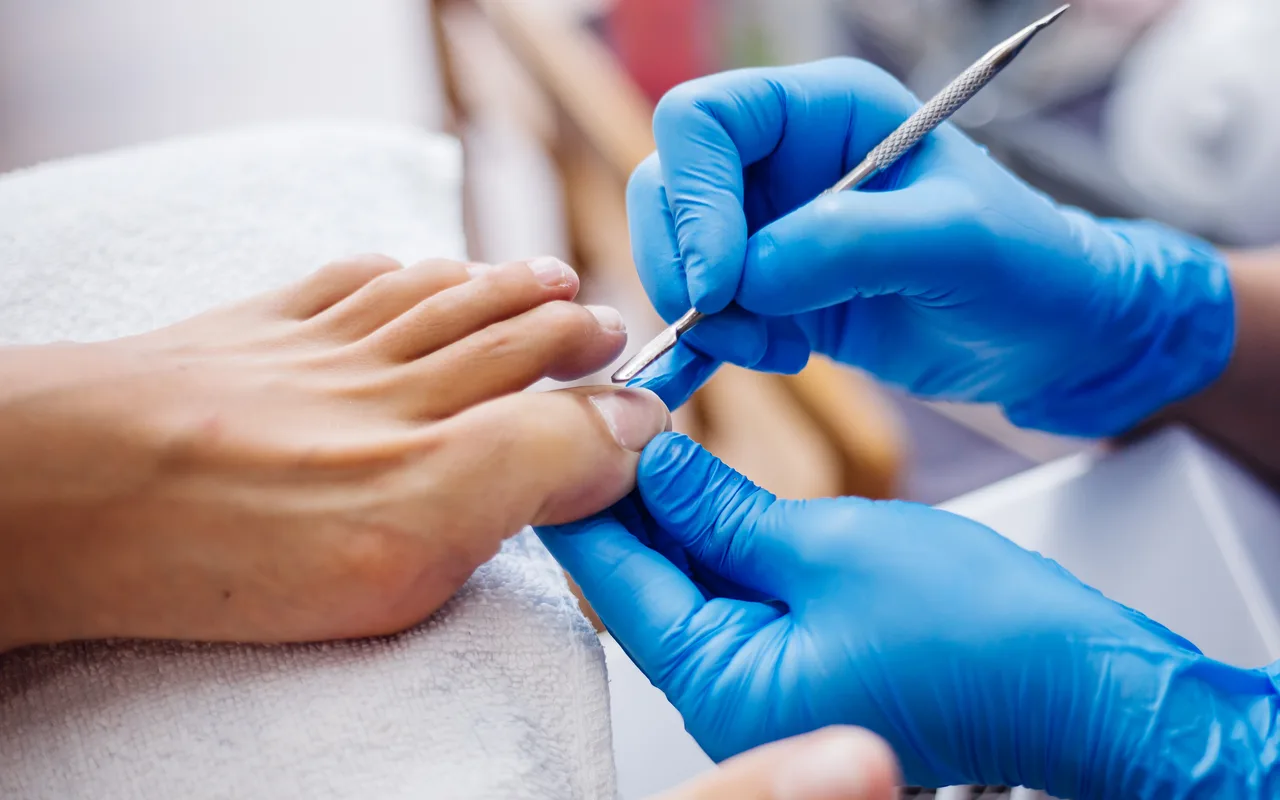
The water should be warm, not too hot. If you have reduced sensation in your feet, as can happen in some people with diabetes, check the temperature with your hand or a thermometer and do not rely solely on the feeling in your foot. A burn would add a problem to the initial one.
Second useful step: relieve the pressure. Wide or open-toed footwear for a few days, and socks that do not constrict. An ingrown toenail is a problem of pressure; anything that is tight makes it worse. If you play sports, temporarily reduce activities that involve repeated impacts on the toe box, and check that your footwear does not press against the toe when going down stairs or running.
Third: after the bath, you can try to gently separate the skin at the edge of the nail with clean fingers, without using instruments or force. If pain allows, this small daily action prevents the skin from continuing to close over the nail. If you feel a sharp sting, bleeding, or resistance, stop: this is not an exercise to be forced.
Keep the area clean and dry for the rest of the day. There is no need to cover it in different products or apply alcohol, hydrogen peroxide, or irritating remedies. If the friction from your sock is bothersome, a loose, clean gauze can protect it, but change it if it gets damp and do not leave it pressed against the edge.
What makes it worse (even if you have read about it out there)
Do not cut the digging corner with household scissors or pliers. Without seeing the full edge and without sterile equipment, the usual outcome is leaving a sharper spur (spicule) that digs deeper as it grows, as well as opening the door to infection.
Neither should you cut a “V” shape in the centre of the nail: it is a myth that this changes how the edge grows. And avoid wedging compressed cotton under the nail on your own: if placed incorrectly, it macerates the skin and breeds bacteria.
Do not try to pierce the lump, drain the pus, or tear off the skin that has grown alongside it. Also, do not share nail clippers or files, and do not use antibiotics or corticosteroid creams without a professional assessment. A cream may temporarily disguise the redness without resolving the spur keeping the problem going.
The MedlinePlus fact sheet on ingrown toenails agrees on the key point: if there is increasing pain or signs of infection, self-treatment ends. To expand on this with an independent source, consult foot injuries and disorders (MedlinePlus).
Signs it is time to see a podiatrist this week
Redness extending beyond the edge, throbbing pain at night, pus, a bad smell, or that lump of red flesh that bleeds at the slightest touch (granuloma). Any of these signs means the nail will no longer be resolved with foot baths.

It is also advisable to seek a consultation if it does not improve after a few days of simple measures, if walking or putting your shoes on becomes difficult, or if the same edge gets injured repeatedly. A small wound that seems stable can remain open if the pressure continues.
And a separate rule: if you have diabetes, poor circulation, or take anticoagulants, an ingrown toenail is not suitable for home treatment at any stage. Seek a direct consultation, without experiments, as we explain in the ingrown toenail fact sheet.
If the infection spreads rapidly, a fever appears, or you feel generally unwell, do not wait for a routine appointment. In these cases, a faster medical assessment is required.
Why a nail becomes ingrown (and why it happens to you)
Behind almost every ingrown toenail there is a combination of factors. The first and most correctable: a rounded and excessively short cut, which leaves a hidden corner under the skin waiting to grow. The second: narrow or pointed footwear, which pushes the skin against the edge of the nail hour after hour.
From there, each foot adds its own: nails with an inherited curvature (tile-shaped or pincer-shaped), sweating that softens the skin of the nail groove, sports with repeated impacts on the toe box —football and paddle tennis are classic examples— and a stubbed toe or a door impact that permanently deforms the nail plate.
It can also happen after a partial loss of the nail, a subungual haematoma, or a fungal infection that has thickened and deformed it. In these cases, the edge can grow irregularly and home cutting becomes especially difficult to control.
Understanding your specific combination matters, because the home remedy treats the episode, not the cause. If your nail is naturally curved and you wear safety boots, salt baths will be an endless sticking plaster.
Ingrown toenail in children and teenagers
It is far more common than parents expect, peaking in adolescence: feet that grow in sudden spurts, footwear that becomes too small without warning, daily sports, and nail cuts done quickly and poorly.
The guidelines change little —foot baths, footwear with enough space, cutting straight across— but a teenager’s patience with pain is what it is, and the temptation for “bathroom surgery” at home is greater. If the edge becomes infected or the episode recurs at the next growth spurt, visiting the podiatrist breaks the cycle of a nail becoming ingrown every term.
A practical tip for parents: check how the nails are being cut. It is the number one correctable cause and no one has shown them how to do it; two minutes of demonstration can save years of scares. It is also worth checking the shoe size regularly: if the toe touches the end of the toe box when standing, it is a sign of a lack of space.
What we do in the clinic (spoiler: relief on the same day)
In an acute ingrown toenail, the visit provides a resolution: the embedded spicule is removed with sterile instruments and local anaesthetic if necessary, and the relief is immediate. Walking out of the clinic normally is the rule, not the exception.
After the procedure, we explain how to care for it, when to change the dressing, and which footwear is most comfortable. For a few days, there may be some sensitivity in the area, especially if the toe was very inflamed. There is no need to improvise aggressive care or resume impact sports until the wound has sufficiently settled down.
If the nail recurs time and again, the problem is the shape of the edge, and here the definitive solution is ingrown toenail surgery: a minor procedure, under local anaesthetic, that corrects the matrix of the edge so that it does not dig in again. Routine care of nails and calluses is handled by podiatry.
The cut that prevents the next one
Prevention can be summed up in one sentence: cut straight across, without cutting too short, with the corners visible above the skin. Neither rounded nor cut as short as possible: the nail should rest on the pad of the toe, not hide underneath it.
Do it after a shower or once the nails have been softened a little, using a clean, personal tool. Do not try to suddenly correct a nail that is already digging in: let a professional examine it if the corner is buried or painful.
If the edge has already given you more than one scare this year, do not wait for the third: a short assessment allows us to tell you whether changing the cut and the footwear is enough, or if your nail has a curvature that requires a definitive solution.