Fungal toenails have a reputation for being incurable, and it is an undeserved one. What does happen is that onychomycosis is frequently treated incorrectly: without confirming it is a fungus, with treatments that are abandoned after two months, and with shoes that reinfect the nail every morning. The result: the nail that “never heals”.
Let us break the cycle in order: first, find out if it is truly a fungus, then treat it for long enough, and always treat the environment as well.
Half of unsightly nails are not fungal
Let us start with a surprise: a thick, yellowish or deformed nail is not automatically a fungal nail. Microtrauma from footwear or sport, psoriasis, or simply the ageing of the nail produce almost identical appearances.
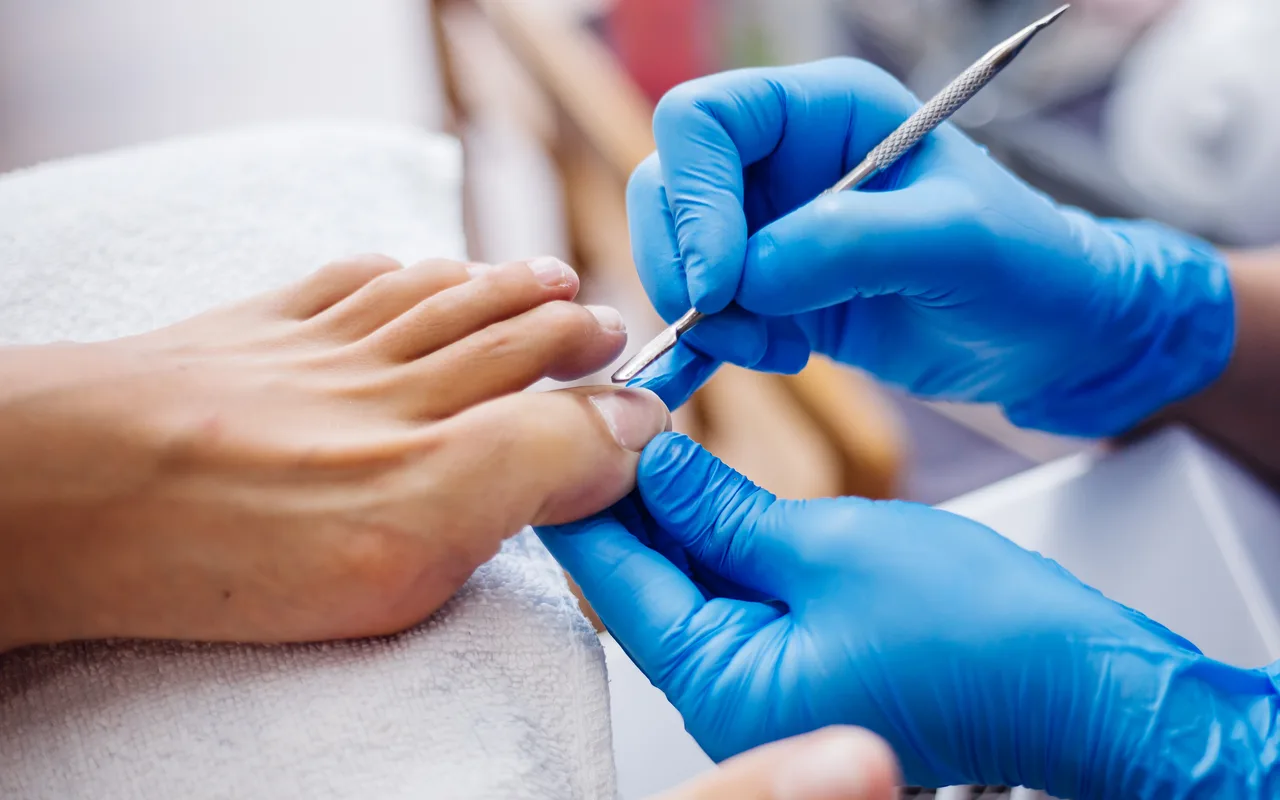
There can also be a nail that partially detaches due to a knock, repeated pressure or tight footwear. In these cases, the colour may change because material accumulates under the nail plate, but this does not necessarily mean there is an infection. The correct treatment will be different and an antifungal will not resolve the root of the problem.
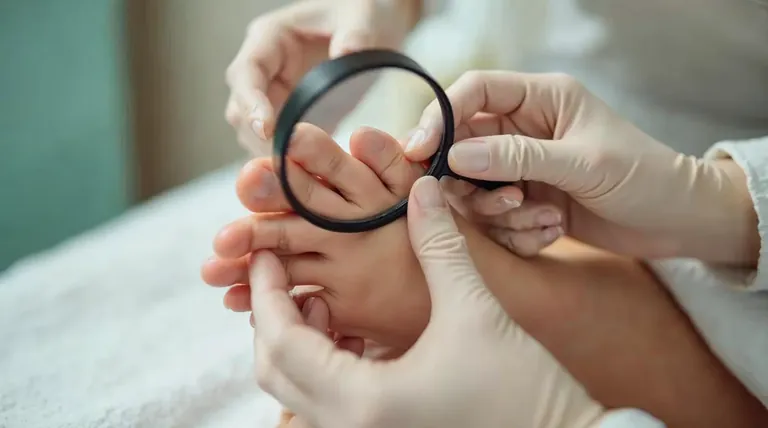
Treating a nail that does not have a fungus with antifungals is the main cause of a “treatment that doesn’t work”. This is why, when faced with a doubtful or stubborn nail, in the clinic we assess the nail plate and, when necessary, confirm with a culture before spending months on treatment, as detailed in the onychomycosis factsheet.
The diagnosis does not depend solely on colour. We observe which part of the nail is affected, whether there is detachment, what the surrounding skin looks like and whether there are similar lesions on other nails. This information helps to decide whether a sample is needed and which treatment makes sense.
Why the nail “improves” and then relapses
A toenail takes about 9-12 months to grow out completely. The antifungal kills the fungus in the new nail plate, but the damaged visible part does not “heal”: it is replaced as it grows.
Here lies the trap: after two or three months the base looks healthy, it seems resolved and the treatment is abandoned. The fungus remaining in the untreated area recolonises the new nail plate and within a few weeks it all starts again. The rule is uncomfortable but simple: the treatment lasts as long as it takes for the nail to renew completely, as noted in the MedlinePlus factsheet on onychomycosis. To expand with an independent source, see foot injuries and disorders (MedlinePlus).
This does not mean you have to wait almost a year to notice any change. One of the first favourable signs is that the new nail growing from the base looks cleaner and more uniform. The old area, however, will remain visible until the growth advances. Taking a photograph every few weeks, under the same lighting and from the same distance, can be more helpful than looking at it every day.
It is also important not to confuse visual persistence with failure. A nail can be free of fungus but still show residual thickness, discolouration or irregularities. On the other hand, if the new part continues to grow altered, if the problem spreads to other nails or if itching and peeling appear between the toes, the diagnosis and the plan need to be reviewed.
Footwear: the reservoir no one treats
The fungus does not just live in the nail: it lives in your slippers, socks and shower. Treating the nail and putting on the same colonised shoes every day means reinfecting yourself daily.
The complete plan includes the environment: antifungal powder or spray inside everyday footwear, socks changed daily (and washed at 60ºC when the fabric allows it), thoroughly dry feet —especially between the toes— and flip-flops in shared showers and swimming pools.
A note from sports podiatry: if you train every day, alternate two pairs of trainers so each pair has 24 hours to dry. Moisture is a fungus’s favourite hotel.
At home, there is no need to turn hygiene into an obsession or constantly disinfect everything. It is more useful to establish simple routines: drying carefully after showering, not storing damp footwear in a closed bag, and not sharing towels, socks or nail clippers. If you live with someone who has athlete’s foot, it is advisable that they treat it too.
When washing your feet, avoid soaking them for a long time. Excess moisture softens the skin and can encourage small fissures, especially between the toes. If you have difficulty reaching them, a thin towel or a hairdryer on a warm setting at a distance can help, without rubbing or burning the skin.
What works according to severity
In mild and distal infections, topical treatments in lacquer form have their role, provided there is consistency over months. When the infection affects the matrix, greatly thickens the nail plate or involves several nails, topical treatments alone are insufficient: oral medication —with the corresponding medical monitoring— and nail reduction (burring) are considered.
This reduction is more important than it seems: reducing the thickness of the damaged nail plate during podiatry removes the fungal load and allows the treatment to penetrate where it needs to act. A thick nail that has not been reduced means a half-hearted treatment.
The decision depends on the affected surface area, the depth, the number of nails and the time of evolution. A small stain on the edge is not the same as a practically detached and deformed nail. Nor is it the same to treat a healthy person as someone with diabetes, poor circulation or medication that requires extra precautions.
Oral medication is not a product to be taken on your own initiative. Before prescribing it, the professional reviews your medical history, possible interactions and, where appropriate, medical check-ups. Always state if you have liver disease, if you take other medications or if you have had reactions to previous treatments. Safety is part of the treatment, not a secondary formality.
By the same token, it is not advisable to aggressively scrape the nail at home or tear off detached parts. You could cause wounds, pain or an added bacterial infection. Cutting must be prudent, without digging into the sides, and significant thickness is best reduced using professional techniques.
And laser therapy? What is actually known
It is the trending question in the clinic. Laser therapy for onychomycosis exists and has its place, but expectations need adjusting: the available evidence is more modest than its advertising, and where it works best is as a complement to a comprehensive plan, not as a magic wand in a single session.
Our stance is the same as with everything else: first a confirmed diagnosis, then treatment proportional to the severity. Be wary of anywhere that sells you laser sessions without even confirming that yours is a fungus.
The same applies to viral home remedies —vinegar, tea tree oil and co.—: they may help in very mild cases, but none reach the nail matrix, which is where the battle is decided in established infections.
Furthermore, “doing something” does not always equate to better treatment. Some products can irritate the surrounding skin or worsen a fissure. If you notice persistent burning, redness, swelling or pain after applying a product, stop and consult before continuing. The aim is to eliminate the infection without creating a second problem.
How to know if the treatment is on the right track
During follow-up, the main criterion is the appearance of the nail growing from the base, not just the colour of the tip. We also assess whether the detachment is decreasing, whether the nail plate is growing out less fragile and whether new affected areas are appearing.
Progress can be slow and irregular. The big toe usually requires more patience because its nail is larger and has often suffered more pressure from footwear. A knock during treatment can temporarily alter the appearance and give the impression that the infection has worsened.
If, after an adequate period, there is no band of healthy nail, if the problem recurs despite following the instructions, or if the initial diagnosis was never confirmed, the case needs to be reassessed. Changing products without reviewing the explanation usually prolongs the uncertainty.
After curing: preventing recurrence
Cured onychomycosis can relapse if the environment does not change, so prevention is part of the discharge process. The essentials fit into a short list: dry feet (paying special attention between the toes), socks made of breathable fibres changed daily, aired and rotated footwear, flip-flops in changing rooms and swimming pools, and nails cut straight across without sharing clippers.
If there was a fungus on the skin (athlete’s foot), treat it seriously: it is the classic gateway to the nail. And check your old footwear; a three-year-old slipper may be the enemy’s last stronghold.
With high-risk nails —those that have already relapsed once, those of daily athletes, those of feet that sweat a lot— periodic reviews in podiatry keep the nail plate thin and monitored. It is the podiatric version of going to the dentist: it is cheaper to prevent than to start all over again.
You do not need to give up sport or your usual shoes. Often, it is enough to check whether the footwear presses on the toes, whether it allows the foot to breathe and whether the inner material dries properly. If the nail is very deformed, temporarily adapting the footwear can reduce pain while you wait for the healthy part to grow.
When to consult (and what you gain from it)
Consult if the nail has been changing in appearance for months, if the pharmacy treatment has not worked after a serious attempt, if the nail thickens until it causes discomfort with footwear, or if you have diabetes or circulation problems —here, an infected nail is never trivial.
It is also advisable to consult if there is increasing pain, discharge, persistent bad odour, spreading redness or a wound around the nail. These signs alone do not confirm a fungus and may indicate another problem that requires attention. If only one nail is affected and the change is very sudden or unusual, do not self-diagnose.
What you gain: leaving with a genuine diagnosis instead of another assumption, a plan proportional to the actual degree of infection, and nail reduction that takes months of advantage away from the fungus. The nail that “never heals” is almost always a nail that was never diagnosed properly.