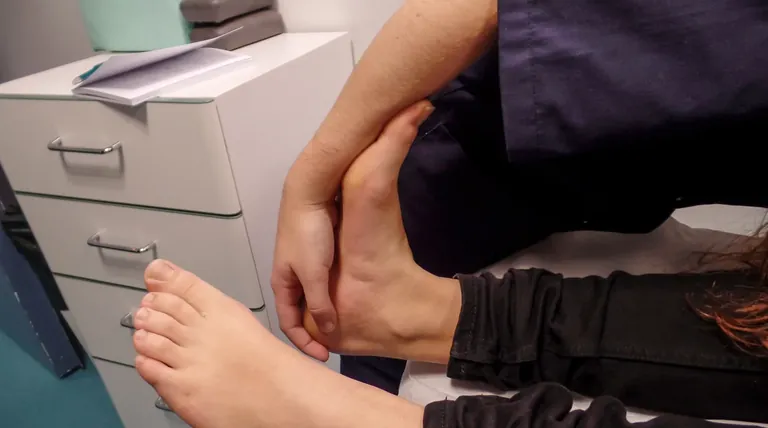
Heel pain when getting out of bed —that sharp sting with the first two or three steps which then eases off— is one of the most common reasons for consultation in podiatry. And it has a usual culprit: the plantar fascia, which, after a night shortened and at rest, suddenly bears all your weight.
The fact that it eases off when walking does not mean it is healing. It means the tissue is warming up. Let us look at what is behind it and what you can do starting today.
The pattern matters more than the pain
In the heel, “when it hurts” is as telling as “how much it hurts”. Sharp morning pain that improves within 5-10 minutes points to plantar fasciitis. Pain that worsens throughout the day points to overstrain. Pain that appears at rest or at night warrants an early consultation, as it falls outside the usual mechanical pattern.
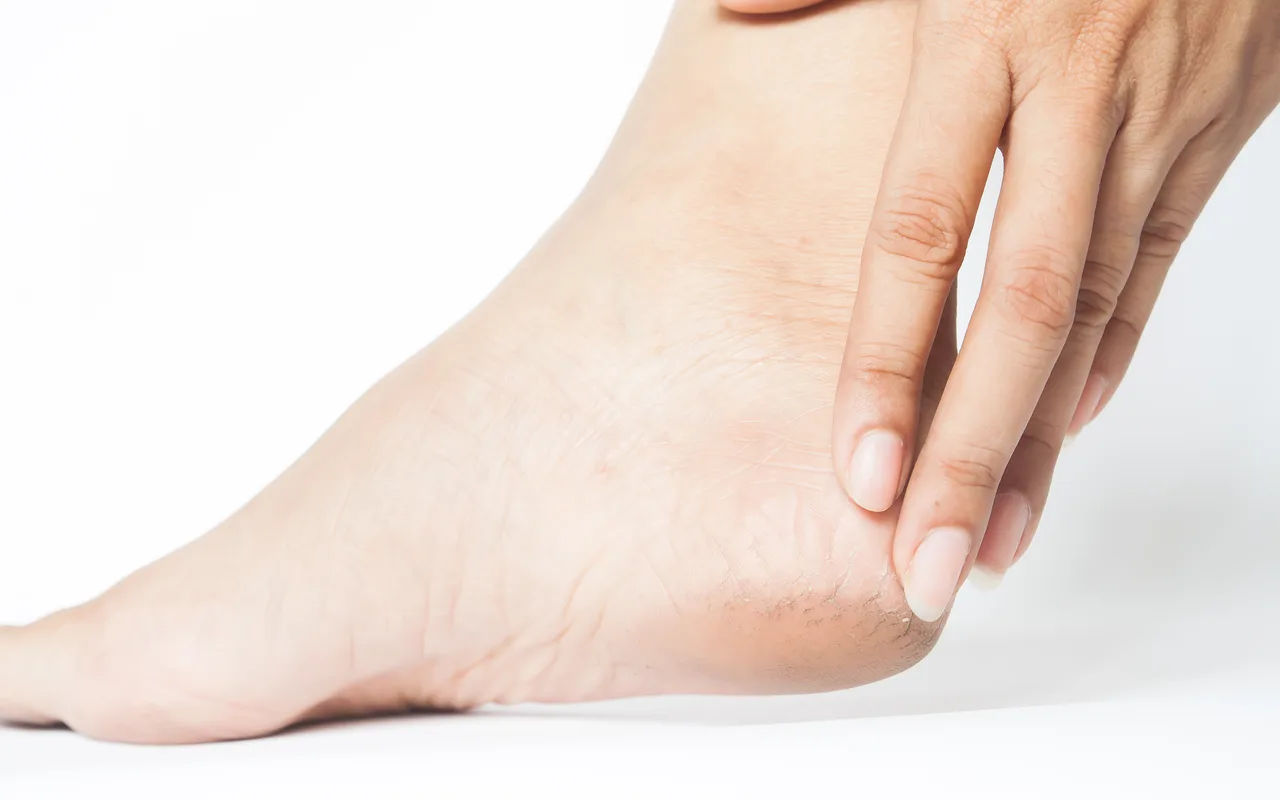
Also note the “where”: fasciitis hurts at the base of the heel, towards the inside. Pain behind the heel, near the tendon, tells a different story (Achilles) and is managed differently.
It is also useful to observe what changed before the pain appeared. A sudden increase in walking, starting to run, spending many hours standing, changing jobs, or wearing new footwear could have increased the load. There is not always a single culprit: often, a tight calf, poor foot strength, and many hours on hard surfaces all add up.
The causes, from most to least frequent
The first, by a wide margin, is plantar fasciitis: the MedlinePlus fact sheet on heel pain identifies it as the most common cause. Next are the heel spur —which, despite its reputation, is often not what hurts—, atrophy of the heel fat pad in those over 60, and nerve entrapments. To broaden your knowledge with an independent source, check foot injuries and disorders (MedlinePlus).
In athletic children and adolescents, the suspect changes: Sever’s disease, an irritation of the heel’s growth cartilage that has nothing to do with the fascia.
Other causes are less common, but important: a contusion after a jump or impact, a stress fracture after increasing activity, or nerve irritation causing burning, tingling, or an electric sensation. This is why one should not assume that all plantar pain is fasciitis, especially if the onset was sudden or the pain does not follow the usual pattern.
A two-minute self-examination
Try this: barefoot, pull your toes upwards with your hand. If the heel pain is reproduced or worsens when stretching the sole, the fascia is the main suspect.

Second test: press your thumb into the base of the heel on the inner side. Localised pain there, combined with the morning pattern, makes up the typical clinical picture. Note: this is a guide, not a diagnosis. Proper confirmation is done via in-clinic ultrasound, measuring the thickness of the fascia.
Perform the tests without forcing and compare both feet. If intense pain, numbness, weakness, or a very different discomfort from what you usually experience appears, stop. A self-examination can help you describe the problem, but it does not replace a clinical assessment. The examination also checks ankle movement, foot strength, arch support, and gait.
What if it hurts behind the heel, and not underneath?
It deserves its own paragraph because it changes the entire diagnosis. Pain at the back of the heel, where the tendon originates, points to Achilles tendinopathy or Haglund’s deformity, and it also causes morning stiffness: the first steps with a “rusty” tendon.
The practical difference: the Achilles problem worsens with uphill walking and stairs and is felt when pinching the tendon; fasciitis hurts underneath, upon weight-bearing. The treatments are similar in philosophy (progressive loading, footwear, correcting the cause) but differ in details, and confusing them wastes months.
A lesser-known third party: the heel fat pad. With age or after repeated injections, it can thin out, and then the pain feels more like a “bruised bone”, worsens when barefoot and on hard surfaces, and improves little with stretching. Ultrasound distinguishes this in a minute.
How long it takes to go away (with proper treatment)
The million-dollar question. With the cause identified and the correct plan, most cases of fasciitis improve noticeably within 6-12 weeks, even if complete tissue healing may take longer. Cases that have been entrenched for a year take longer to resolve: the tissue has moved from inflamed to degenerated and requires regenerative treatments such as PRP.
The timeframe depends not only on finding a treatment, but also on being able to adjust the load. It is not the same for someone who walks for a short while each day as it is for someone who works standing up, trains several days a week, or has to constantly go up and down stairs. In these cases, it is often not necessary to stop everything, but rather to temporarily reduce what triggers the pain and maintain compatible activity.
Hence the underlying message of this guide: morning heel pain does not improve by hiding it under the pillow. Every month that passes without a diagnosis is a month added to the end of your recovery.
What to do starting tomorrow
First: do not get up “cold”. Before putting your foot on the floor, sit on the bed and pull your toes towards you for 30 seconds with each foot. This movement prepares the fascia and usually reduces the initial sharp pain.
Second: footwear with a bit of cushioning from the very first step, also around the house. Flat slippers and hard floors are plantar fasciitis’s favourite breakfast.
Third: begin a serious exercise routine. We have a complete guide with the exercises for plantar fasciitis that work, featuring the exact stretching and strength routine.
Add a simple rule: the exercise should not leave you clearly worse the next day. Mild discomfort during loading may be acceptable, but if the morning pain progressively increases, the intensity, technique, or volume must be reviewed. Foot and calf strength must be built up gradually; starting too hard can also irritate the tissue.
Ice can provide temporary relief after activity, but it does not correct the cause. If you use it, protect the skin and avoid applying it for a long continuous period. And before taking medication, consult a professional if you have other illnesses, are taking other drugs, or if the pain is persistent.
What tends to prolong the problem
Waiting “to see if it goes away on its own” is the number one reason we see plantar fasciitis with a one-year duration. Irritated tissue that continues to bear the same load every day has no reason to improve; the average healing time drags on the longer the pain has been present.
The second mistake: treating the symptom with anti-inflammatories without addressing the mechanical cause. If your arch collapses or your calf pulls too much, the heel will continue to foot the bill until this is corrected.
It is also counterproductive to change many things at once: insoles, shoes, absolute rest, and intense exercises without knowing what is actually helping you. An organised plan allows you to identify the foot’s response and make adjustments. Insoles can be useful in some cases, but they should accompany rehabilitation, not become the sole measure.
When to book an appointment
If the morning pattern has lasted for more than 3-4 weeks, do not wait any longer: the earlier the cause is confirmed, the simpler the treatment is. In the clinic, the pathway is direct: examination, heel ultrasound during the same visit, and a concrete plan — from exercises and insoles to regenerative treatments if the fasciitis is already chronic.
Seek consultation earlier if you cannot bear weight on the foot, if the pain started after trauma, if there is significant swelling, redness, or heat, if you have a fever, or if the pain wakes you up at night. It is also advisable not to wait if you have diabetes, circulation problems, loss of sensation, or a rheumatic disease.
Morning heel pain is one of the most rewarding conditions to treat when caught early. Do not gift it months.