You have probably arrived here after calling a few places and receiving very different answers. This is normal. The question “how much does bunion surgery cost?” does not have a single figure, and the most honest thing we can tell you is that any fixed price given to you over the phone, without having examined your foot, carries little weight.
It is not to confuse you: it is simply that the price depends on factors that can only be assessed during a consultation. Here we explain what these are, so you can compare quotes objectively and avoid any surprises.
It is also important to separate two questions that often get mixed up: how much the surgery costs, and whether surgery is actually the right option for you. The price only makes sense after assessing the pain, the deformity, the limitations in your daily life, and the available alternatives. You do not operate on an X-ray, but rather on a person with specific symptoms and expectations.
What makes the price go up or down
There are four factors that explain almost all the difference between one quote and another.
The first is how many toes are operated on. Correcting an isolated hallux valgus is not the same as combining it with a hammer toe or associated metatarsalgia. The more surgical steps required, the more complex the procedure.
In some cases, the problem is not only in the bone forming the bunion. There may be a deviation of the big toe, a joint alteration, an overload under the metatarsals, or toes that have lost space inside the shoe. All of this must be analysed together to avoid treating only one part of the problem.
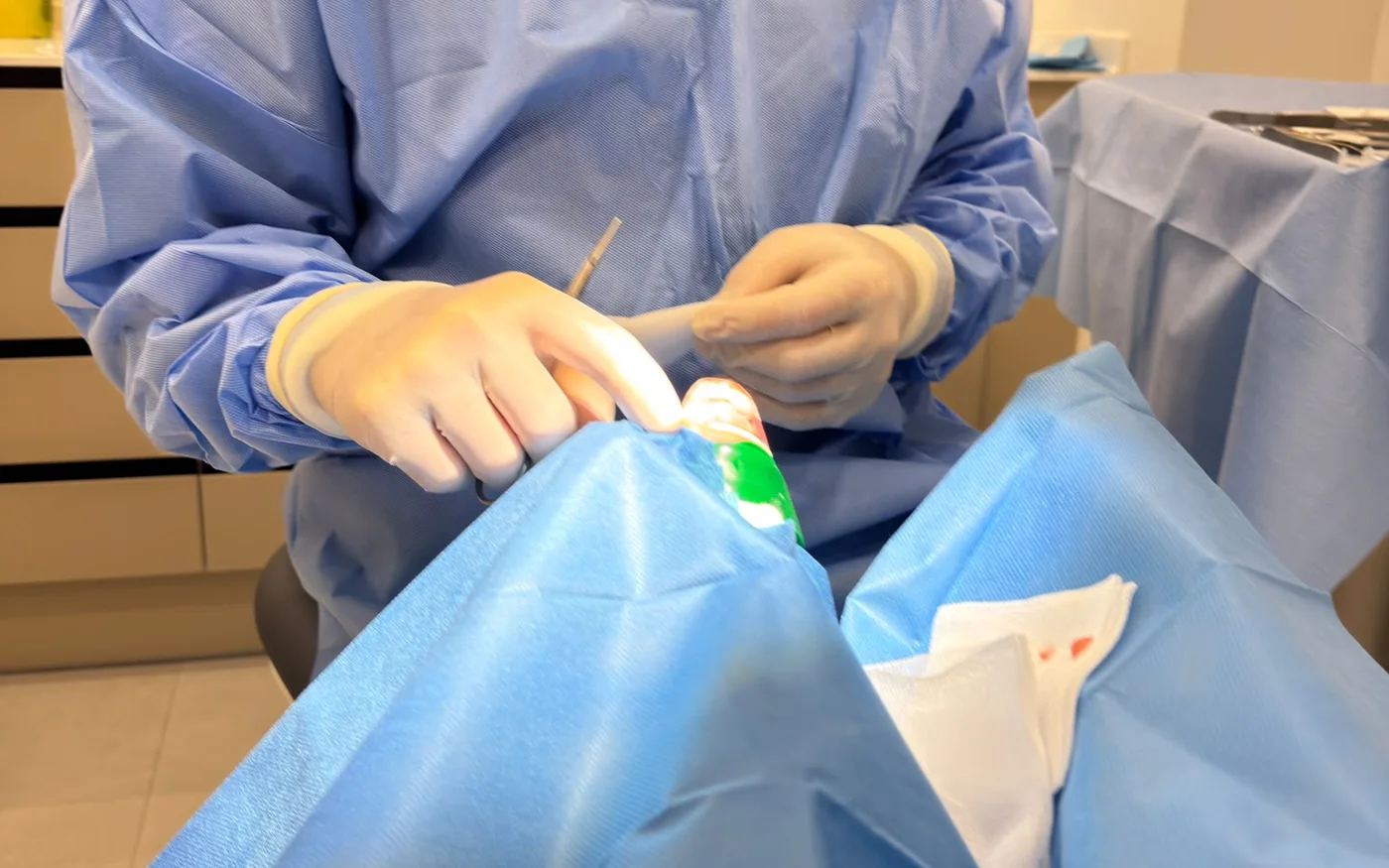
The second is the facility and the anaesthesia. Operating in a leading hospital like the Centre Mèdic Teknon, with an anaesthetist and a fully equipped operating theatre, does not have the same overhead costs as a minor procedure. The type of anaesthesia (local, regional, or sedation) also plays a part.
The most appropriate method depends on the procedure, your overall health, any anxiety the procedure may cause you, and the criteria of the medical and anaesthetic team. A more complex anaesthesia does not always mean better surgery. What matters is that it is safe and appropriate for your case.
The third is the technique. Minimally invasive surgery uses very small incisions; open surgery is more indicated for severe deformities. Neither is inherently “the cheap one” or “the expensive one”: the choice is a medical one, based on your specific bunion.
The technique may also vary depending on whether it is necessary to correct the bone alignment, stabilise a joint, or work on the soft tissues. A small incision does not necessarily mean a straightforward operation, nor does a larger incision imply worse treatment. The priority is to correct the root cause of the deformity with a well-reasoned indication.
And the fourth, which many people forget: follow-up care. A price that includes all follow-up appointments, dressings, and check X-rays is not comparable to one that charges you separately for each visit.
The necessary materials, post-operative check-ups, and the type of footwear or device used during recovery may also have an influence. Not all cases require exactly the same things. This is why it is useful to request an itemised quote, where it is clear what is included and what might be billed separately.
Why you should be wary of a fixed price over the phone
When someone gives you an exact figure without seeing you, they are either giving you a “starting from” price (the bare minimum, which will rarely be yours) or they are not taking your actual case into account. Your foot X-ray can change everything: the angle of the deformity, the condition of the joint, and whether other toes are involved determine the technique and, therefore, the cost.
Furthermore, the intensity of the pain does not always match the visible size of the bunion. There are people with an obvious deformity who can walk with little discomfort, and others with a more subtle deformity who cannot find a single comfortable shoe. The decision should not be based solely on the appearance of the foot.
This is why at Serven the logic is the other way around: first, an initial consultation where we assess your foot, take a digital X-ray if necessary, and explain your options; and then, a specific quote for your case. With no obligation and transparent figures.
During this consultation, you can also explain what you hope to achieve: walking without pain, returning to sport, being able to wear certain shoes, or preventing the deformity from continuing to limit you. These expectations help to assess whether surgery is the best option right now, whether it is advisable to wait, or whether simpler measures should be tried first.
Compare what is included, not just the figure
If you are requesting quotes from several clinics, the practical advice is this: do not compare the totals, compare what is included within each total. Always ask if the price covers the operating theatre, the anaesthetist, the materials, the X-rays, and all follow-up appointments until discharge. Two quotes that seem very different often look quite similar once you put the same contents inside them.
You can also ask who will handle your follow-up if pain, swelling, or any queries arise during the first few days. A clear explanation of the available contacts, dressing changes, and check-ups is part of the care, even if it is not always highlighted in the quote.
Before accepting, check whether the figure refers to one foot or both, whether it includes the pre-operative assessment, and whether it covers any additional tests should they be necessary. Ask for any exclusions to be put in writing. It is not about seeking the longest quote, but about understanding exactly what you are paying for.
And remember that not every bunion requires surgery. If yours is mild or moderate and it is the pain that bothers you, it is worth reviewing the non-surgical options first: they do not “cure” the deformity, but in many cases, they allow you to live with it comfortably and delay or avoid the procedure.
These options may include footwear changes, adaptations to reduce pressure, treatment for irritated skin, or a gait assessment. Their goal is to control the symptoms and improve function, not to promise that the bone will return to its original position. If the pain persists despite these measures, then it makes sense to discuss surgery again.
What is worth looking at before the price
A bunion operated on without proper planning can recur, and then the cheap option becomes expensive. Before deciding based on the figure, look at three things: who operates on you (specific experience in foot surgery), where they do it (a centre with guarantees), and what follow-up you will have afterwards. This combination carries far more weight in the final result than a few pounds either way.
Also, ask whether they have explained why they recommend a particular technique and what alternatives have been ruled out. A good indication is not about presenting one technique as the best for everyone, but about linking it to the shape of your foot, the condition of the joint, and your needs.
Recovery is not the same for everyone or for every type of surgery. Usually, it requires planning the first few days, limiting certain activities, and following instructions regarding weight-bearing, foot elevation, footwear, and wound care. If you work on your feet, drive, or care for others, it is advisable to discuss this beforehand to plan realistically.
During the post-operative period, it is normal to have questions about swelling, pain, or the pace of recovery. You should not be left wondering which symptoms are part of the expected progress and which require contacting the team. This information is just as important as the quote.
If you want to get a realistic idea of what the aftermath is like, we have explained the recovery from bunion surgery step by step. And to understand when a deformity calls for surgical evaluation, the bunions (hallux valgus) page details this. To contrast general information with an independent source, the American Academy of Orthopaedic Surgeons maintains an informative guide on hallux valgus, as does the American College of Foot and Ankle Surgeons.
The short version: the cost of bunion surgery is a conversation that begins by examining your foot, not by putting the phone down with a figure. If you wish, request an initial consultation and we will give you a real one, with everything included and no small print.