Noticing your child’s flat feet and worrying is a classic parenting trait. The good news upfront: nearly all toddlers have flat feet, and in the vast majority, the arch develops on its own as they grow. The right question is not “do they have flat feet?”, but rather “are they the type that corrects itself, or the type that needs monitoring?”.
Furthermore, it is important not to assess solely based on the footprint the foot leaves behind. The shape can look very flat when standing, yet mobility, gait, and the ability to stand on tiptoes can be perfectly normal. What guides us is a combination of appearance, flexibility, and symptoms.
Below are the approximate age milestones, a home test, and the warning signs that do justify a visit.
Why almost all children have flat feet
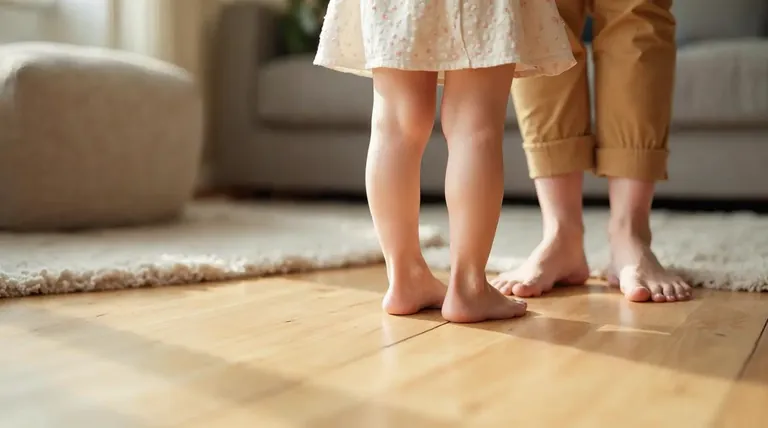
Up to 3-4 years of age, the sole of a child’s foot has a fat pad that fills the arch, while the muscles and ligaments are still maturing. The result is a completely normal flat footprint.
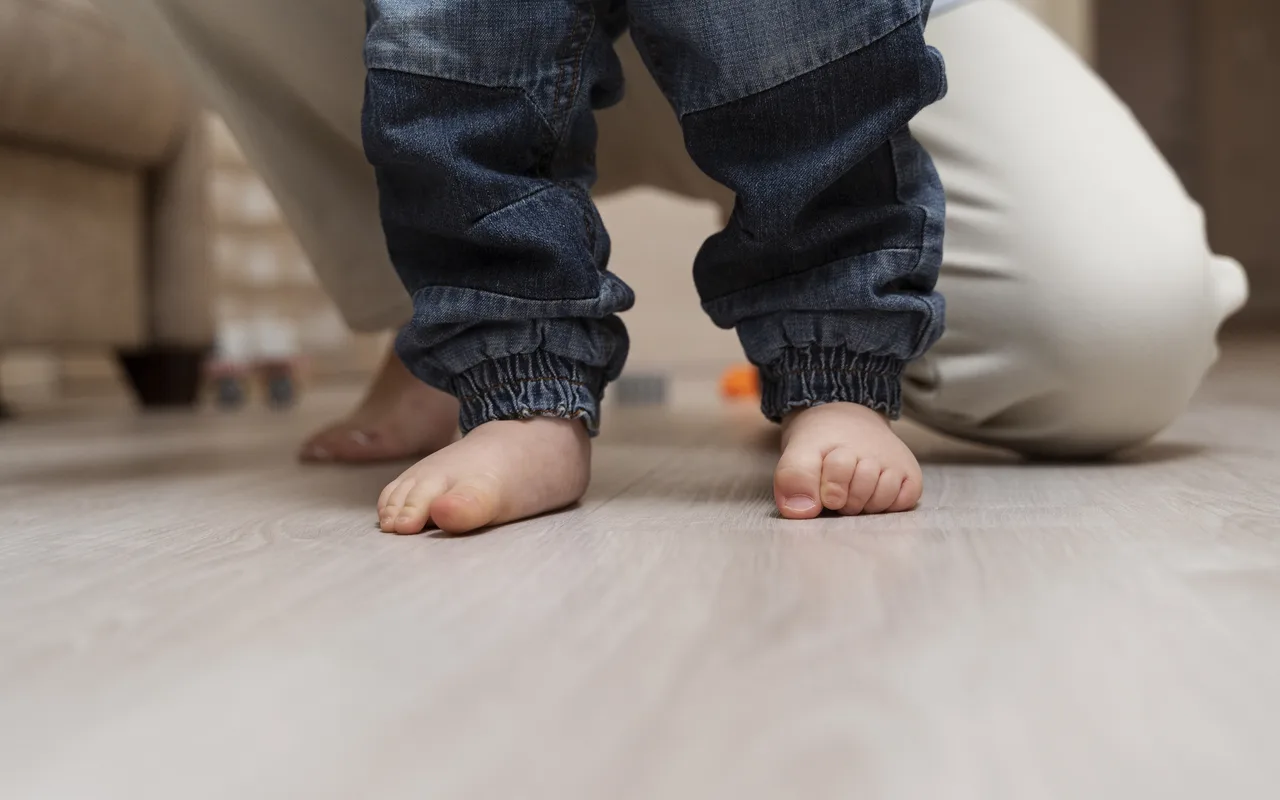
Through walking, playing, and growing, the arch gradually lifts. The standard benchmark: between the ages of 6 and 8, the arch should be reasonably defined, as noted in the MedlinePlus fact sheet on flat feet. To expand on this with an independent source, see foot injuries and disorders (MedlinePlus).
This development is not identical in every child. Family genetics, ligament laxity, and the rate of growth can cause the arch to appear earlier or later. This is why a one-off photograph or an isolated footprint cannot predict what the foot will look like in a few years.
During the day, it is also normal for the appearance to change. After running, jumping, or standing for a long time, the foot may look flatter due to fatigue. Provided it regains its shape at rest and the child continues their normal daily activities, this is usually of little clinical relevance.
The tiptoe test (do it at home)
Ask your child to stand barefoot on their tiptoes while you watch them from behind. If the arch appears as they rise and the heel tilts slightly inwards, you are looking at a flexible flat foot: the benign kind that accompanies growth.
Another variant: with the child sitting and their foot dangling, check if the arch forms on its own. Should the arch appear when non-weight-bearing and disappear when standing up, the reassuring diagnosis remains the same.
Conduct this test when the child is relaxed, and not immediately after intense activity. There is no need to force the movement or ask them to hold the position if it feels uncomfortable. Observe both feet and compare them, as symmetry also provides valuable information.
What should not happen: the arch fails to appear either on tiptoes or when sitting (rigid flat foot), or standing on tiptoes causes them pain. This is not “just their age” and warrants an early assessment.
The warning signs that do justify a visit
Rather than just the shape of the foot, look at its function. Consult a professional if your child complains of pain in their feet, ankles, or knees during activity; if they constantly ask to be carried or tire much more quickly than other children their age; if they trip or twist their ankles with noticeable frequency; or if their shoes always wear down in the same way, with the heel counter collapsing inwards.

Similarly, a clearly asymmetrical flat foot —one foot being much flatter than the other— and one that remains flat past the age of 7-8, even if painless, warrants a visit: this is the time to check that everything is on the right track, as we explain in our paediatric flat feet guide.
You should bring the appointment forward if the pain also occurs at rest or at night, if there is swelling, marked stiffness, an area that is very tender to the touch, or a clear limitation when running and playing. A foot that suddenly becomes flat, especially after an injury or associated with pain, should never be dismissed as typical growing pains.
When explaining the issue, it helps to describe when the pain occurs, what activity triggers it, and whether it improves with rest. Bringing in their regularly worn shoes can also be useful: the wear pattern can provide clues, although on its own it does not provide a diagnosis.
What we do during the paediatric assessment
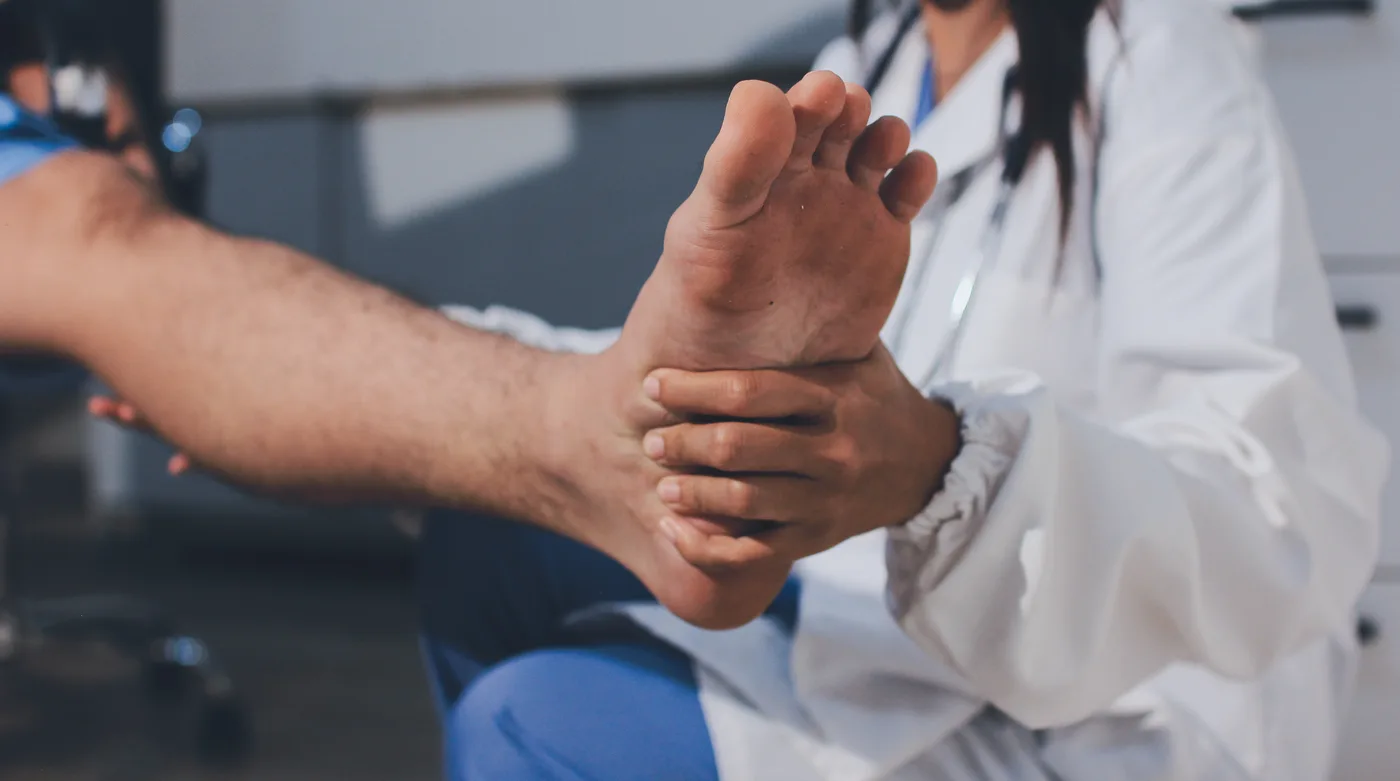
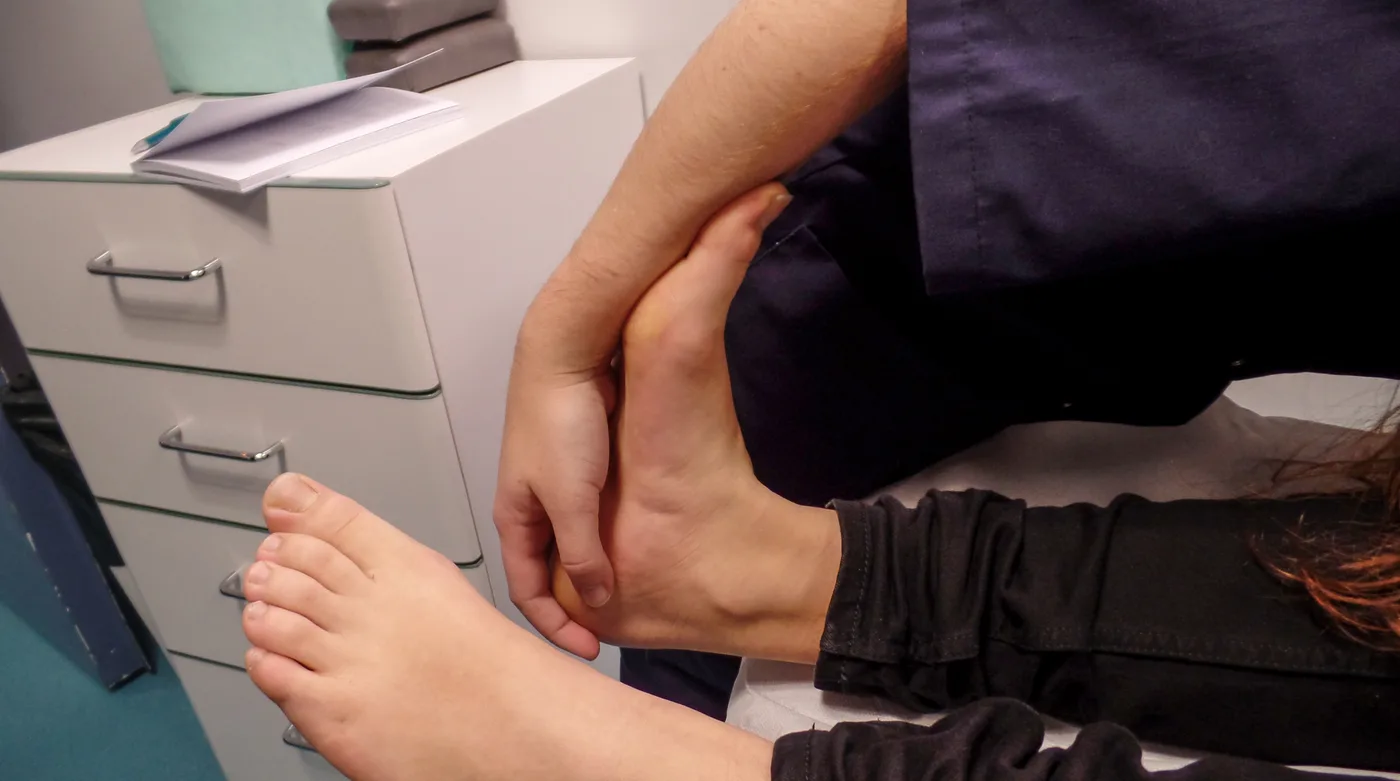
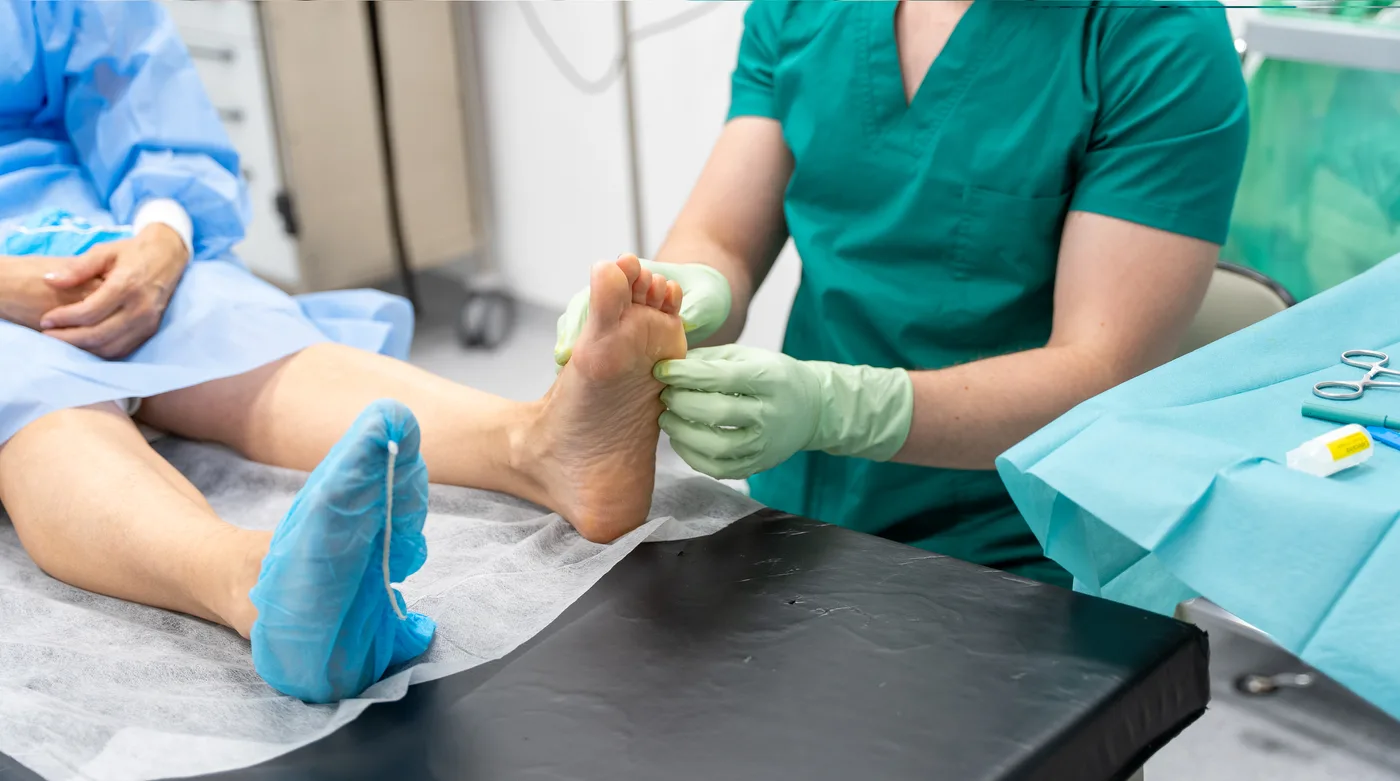
Nothing daunting here, and children usually find it rather fun: an assessment of mobility, a properly conducted tiptoe test, and a look at how they walk and run. If we need objective data, a gait analysis using a pressure platform shows on screen how each part of the foot bears weight.
During the consultation, we also evaluate ankle mobility, foot flexibility, strength, and coordination. A child who walks with their foot turned slightly inwards but runs and plays without discomfort is not in the same boat as one who limits their activity or compensates using their knees and hips.
Based on this, we separate the scenarios into three groups: normal flexible flat foot (monitoring and carry on playing), symptomatic flexible flat foot (exercises and, if appropriate, orthotic insoles), and the uncommon rigid flat foot, which requires more in-depth study.
Not every case requires imaging tests. X-rays are reserved for specific situations, such as rigidity, persistent pain, significant deformity, or doubts regarding the bone structure. The decision relies on the physical assessment and the condition’s progression, not just on its visual appearance.
What you should NOT do
This needs to be stated just as clearly as the above. Those rigid orthopaedic boots from forty years ago are completely unnecessary: there is no evidence to support them, and a child’s foot needs to move, not be casted. Neither do you need “corrective shoes” with hard soles: the ideal children’s footwear is flexible, lightweight, and has plenty of room for the toes.
When choosing shoes, ensure the toes can move freely and the heel is held securely without pinching. The sole should allow flexion at the toe area, and the shoe should not require a long, painful breaking-in period. There is no need to buy them with a massive amount of growing room or to attempt to alter the gait using uncomfortable styles.
However, a child with a flexible, asymptomatic flat foot does not need to be restricted from sports. Quite the opposite: running, jumping, and climbing is the best gym for the arch. Furthermore, barefoot activities on uneven surfaces —sand, grass, mats— provide free training for the foot’s musculature.
Any progression must be gradual if the child is taking up a new activity or significantly increasing their training load. Repeated pain should not be normalised and automatically blamed on flat feet; it can also be linked to overuse, unsuitable footwear, or another cause that needs exploring.
Finally, no, there is no need to repeat X-rays “just to keep an eye on” a flexible flat foot that is doing perfectly well. A functional assessment and, if necessary, a pressure platform provide the necessary information without exposing anyone to radiation.
Flat feet that persist into adolescence
A special mention must go to persistent cases: the teenager with flat feet who starts competing in sport, gains weight, increases their training hours, and begins to notice discomfort in their feet, ankles, or knees. This is the profile where flat feet cease to be a mere finding and become a contributing factor.
At this stage, a comprehensive gait analysis makes perfect sense: their footprint is now practically the permanent one, and we can work on foot-strengthening exercises or, if symptomatic, with sports insoles that support their actual activity.
These exercises may involve working on the foot’s intrinsic muscles, ankle and leg control, and balance tasks. The aim is not to achieve a perfect shape or to endure lengthy sessions, but to improve control and better tolerate physical loads. The programme must be tailored to their age, sport, and the root cause of their discomfort.
The message we like to leave with parents is this: having flat feet is not a life sentence, it is simply a trait to keep an eye on. Most children outgrow it naturally; for those who do not, today we have excellent ways to support them.
Insoles yes, insoles no
Neither the decades-old belief that “all children with flat feet need insoles”, nor the reactionary claim that “they never do any good”. The current criterion is functional: use insoles when there are symptoms —pain, fatigue, altered gait, abnormal wear— and not as an ornament for a perfectly happy, flexible flat foot.
When prescribed for children, they must be reviewed as they grow: the foot changes in both size and shape, and the insole needs to keep up with this process, not be left gathering dust in a drawer.
An insole should never cause pain or act as a substitute for proper footwear. During the first few days, it is advisable to observe how the child tolerates it and to report any persistent discomfort, pressure, or chafing. In some cases, the goal is to offload a specific area; in others, it is to facilitate a sporting activity or provide comfort during a period of overuse.
Worried about your child’s feet? A brief assessment can clear up the uncertainty: either we confirm that everything is part of normal development —the most frequent outcome— or we catch in good time whatever needs monitoring. Whatever the outcome, you will leave with a clear answer.