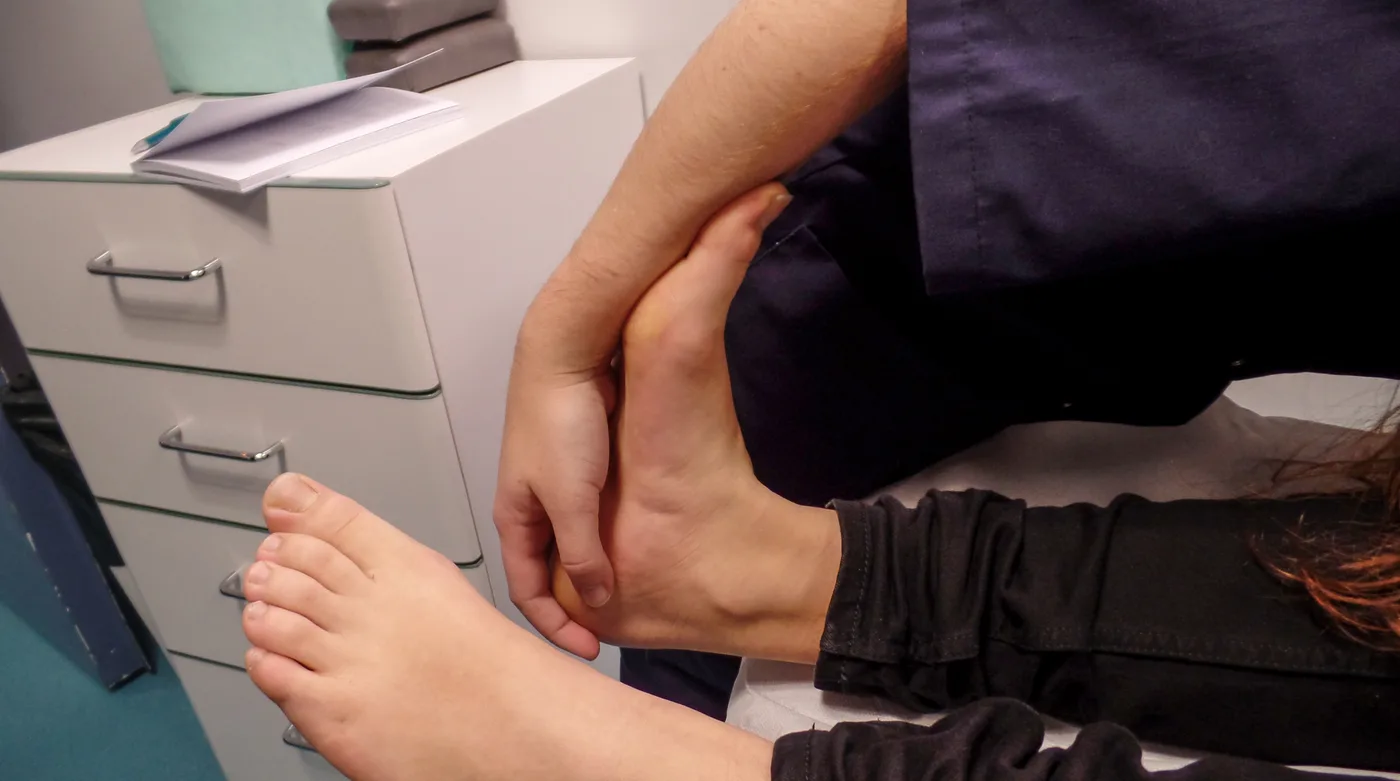
Let’s get straight to the point, because that’s what you’re worried about: yes, you do feel a foot injection, but the fear is usually far greater than the reality. Most patients leave saying something along the lines of “after everything I had imagined, that was nothing”. Here we explain plainly what you will feel, why the technique matters, and what the following hours are like.
An injection involves administering a medication into or around a specific structure of the foot or ankle. It can be performed in a joint, a bursa, a tendon sheath, or an inflamed area, provided the diagnosis and examination indicate that it is a reasonable option. It is not a treatment suitable for any type of pain, nor does it replace a full assessment.
Before suggesting it, it is necessary to understand where the discomfort comes from, how long you have had it, which activities trigger it, and what has been tried up to that point. In some cases, an injection will be the best option. In others, it may be more appropriate to modify weight-bearing, undergo physiotherapy, use an orthosis, review your footwear, or consider a different treatment.
What you feel, step by step
An injection has two stages. The first is the needle prick as it passes through the skin: a brief sensation, similar to a blood test. The second is whilst the medication is being administered, when you may feel pressure in the area, rather than sharp pain. This pressure depends on the structure being injected and usually lasts a few seconds.
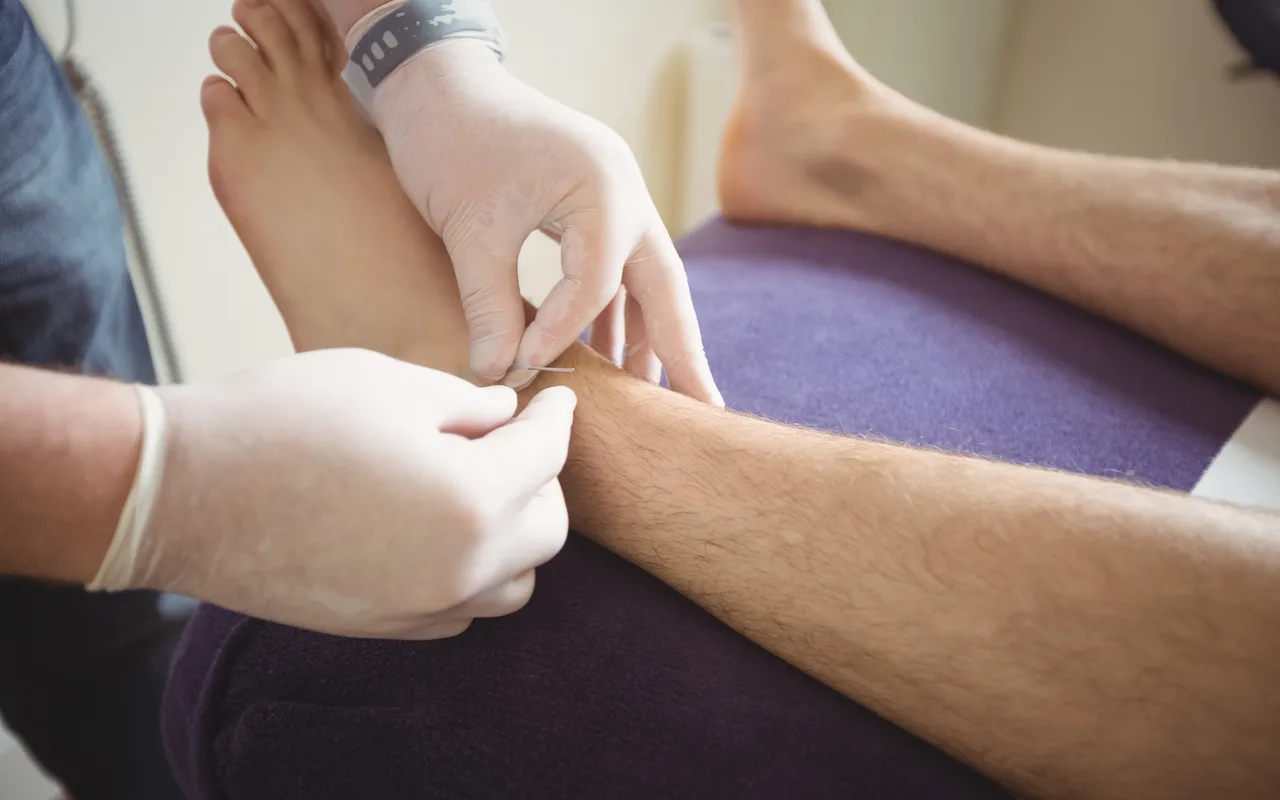
In areas with little fat, such as the heel, the sensation may be slightly sharper; in others, it is almost imperceptible. None of this requires general anaesthesia or anything of the sort: it is an in-clinic procedure.
The intensity also varies depending on the area, the degree of inflammation, and each person’s sensitivity. If you are nervous, it is normal to feel any stimulus more intensely. This is why it helps to tell us beforehand if you have a fear of needles, if you have had a bad experience, or if you are particularly sensitive to pain. We can prepare the procedure, describe each step, and avoid any unnecessary surprises.
During the injection, it is important that you let us know if you feel a pain that is very different from what we had described, an electrical sensation that spreads, or any discomfort that worries you. There is no need to suffer in silence. Communication allows us to adjust the pace, check the position, and decide whether to pause for a moment.
The skin is cleaned before starting, and a careful technique is maintained to reduce the risk of complications. A small dressing may then be applied. Usually, the procedure is quick and does not require admission or staying for observation for hours.
Why ultrasound guidance changes everything
Here is the key that makes an injection far more manageable. Performing it “blindly” forces the doctor to locate the point by touch and anatomical reference, and sometimes to reposition the needle a couple of times before reaching it. These readjustments are usually what causes discomfort during an injection.
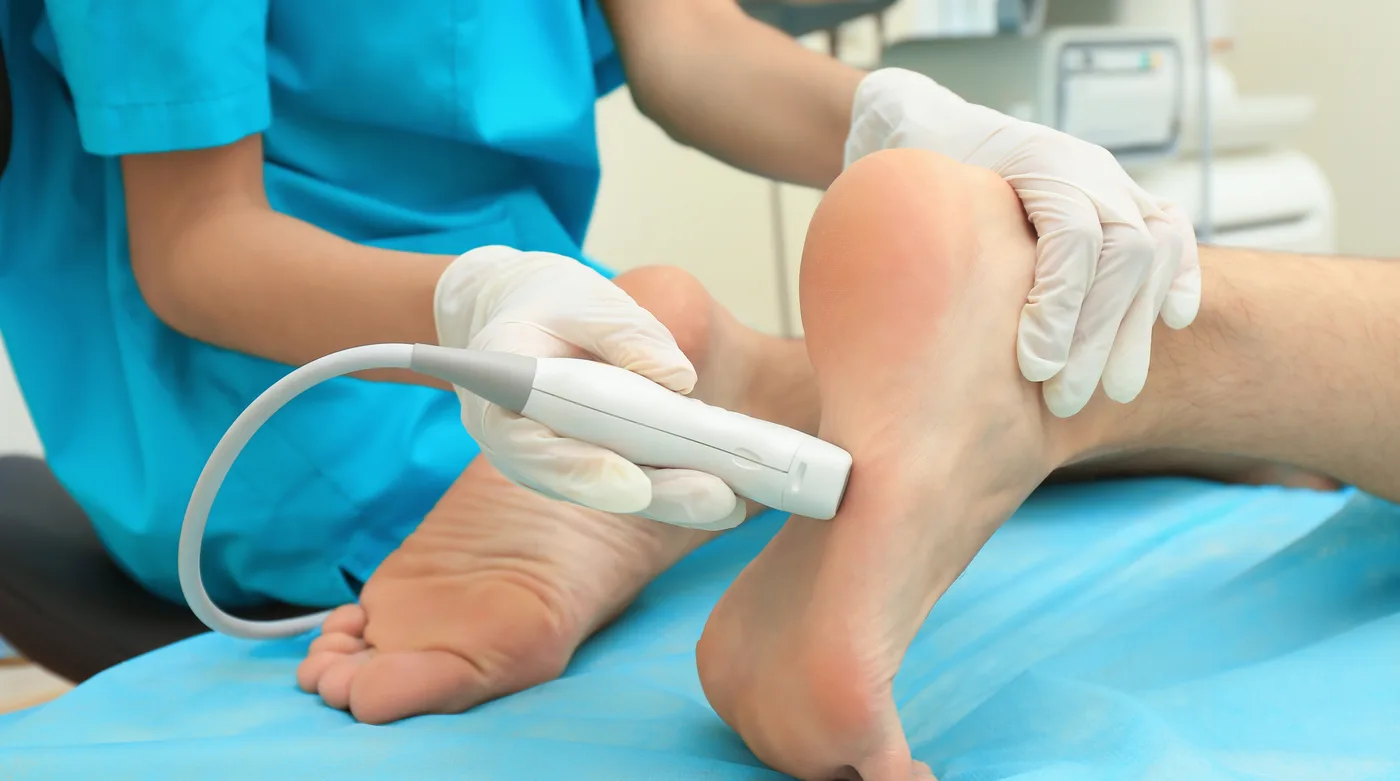
With ultrasound-guided injections, the doctor sees the needle in real time on the screen and guides it directly to the exact spot, avoiding tendons, nerves, and blood vessels, which in the foot are located very close to each other. The result is twofold: greater precision (the medication reaches where it needs to) and less discomfort (less trial and error). In-clinic ultrasound is part of how we approach diagnostic technology at the centre.
Ultrasound is not just a screen to look at before injecting. It allows us to identify the structure, observe its movement, and follow the path of the needle as it advances. This is particularly useful in small and complex areas, such as the ankle, the hindfoot, the sole of the foot, or around the tendons.
It also helps to confirm that the problem we are treating actually corresponds to the area where the pain was located. If the examination and the image do not match, it is better to review the diagnosis rather than proceed automatically. A precise injection does not make up for an incorrect indication.
It should be noted that ultrasound improves visualisation and precision, but it does not make the procedure completely painless or eliminate all risks. Every anatomy is different, and some areas may be more sensitive. Its main advantage is being able to work with more information and control.
When it is indicated and what to expect
The indication depends on the diagnosis. It may be considered for specific inflammations, joint pain, tendon problems, or situations where temporarily reducing discomfort is necessary to facilitate functional recovery. Not all injections use the same product or have the same objective.
In some cases, the aim is to reduce inflammation and pain. In others, the intention is to improve joint comfort or give a window to resume exercises and rehabilitation measures. This is why it is important to ask what will be injected, for what purpose, and what role it will play within the overall plan.
The objective is not always for the pain to disappear immediately. A partial improvement can also be clinically useful if it allows you to walk better, sleep, or do exercises that you previously could not tolerate. At the same time, if there is no change or if the pain clearly worsens, the progression needs to be reviewed and the procedure should not be repeated without a new assessment.
And afterwards? What the following hours are like
Generally, you can walk out. The usual recommendation is to avoid intense exertion and sport for the following 24-48 hours, so the treatment can do its job peacefully.
It is worth knowing one thing so it does not catch you by surprise: sometimes, during the first hours, there is some discomfort before the relief begins, especially with certain medications. This is temporary. The time until you notice the improvement depends on what is injected: corticosteroids usually take effect within a few days, whereas hyaluronic acid or growth factors have a more progressive effect over the course of several weeks. This nuance is important in conditions such as ankle osteoarthritis, where the aim is to gain time and quality of life.
During this period, walking around the house or doing light everyday activities is very different from running, jumping, or doing an intense session. The specific guidelines may change depending on the injected area and the product used. If you have been given specific instructions, these take priority.
You do not need to wait for a specific sensation to know if it has worked. Some people notice an improvement quickly, whilst others experience it gradually. Keeping a mental note of how you walked before, which activities caused you pain, and what happens afterwards can help to assess the result more accurately.
It is also advisable not to push yourself too hard on the first day just because “now that I’ve had the injection, I can go back to normal”. A reduction in pain does not necessarily mean that the structure has recovered. The reduction of symptoms must be accompanied, where appropriate, by a gradual return to activity.
Which signs require a consultation
Mild discomfort at the injection site can be considered normal. However, you should consult us if you experience intense or progressive pain, a significant increase in swelling, spreading redness, marked local heat, discharge, fever, or general malaise. You should also notify us if you notice new weakness, persistent loss of sensation, or unexpected difficulty moving your foot.
These situations are not the most common, but it is important to be aware of them. Do not try to interpret them on your own or wait several days if the symptoms are intense or worsening. The indication and urgency will depend on what we observe and your medical history.
Before the injection, please let us know if you are taking anticoagulant or antiplatelet medication, if you have any allergies, diabetes, clotting problems, an active infection, or if you are pregnant. Do not stop any medication on your own. This information allows us to better assess whether the procedure is suitable and what precautions need to be taken.
The fear worth leaving behind
Many people put up with pain for months to avoid an injection that lasts seconds. It is understandable, but often the calculation does not pay off: a well-indicated and well-performed injection can save you weeks of discomfort. The point is not about “injecting for the sake of injecting”, but rather ensuring it is indicated and done precisely.
This is why at Serven we do not perform injections without first confirming where the pain comes from and whether this is the best approach. If you wish, you can read general and independent information about corticosteroid injections on the US National Library of Medicine (MedlinePlus) and their page on foot injuries and disorders, and then we can discuss how it applies to your specific case.
It is also normal to want to know if you will need to be accompanied. In many cases it is not necessary, as you will be able to walk out. If you are very nervous, have difficulty walking, or the injection is in an area that limits you, coming with someone may make you feel more at ease. The most important thing is to plan it with common sense and not turn a simple visit into a source of anxiety.
An injection should also not be a rushed decision. You have the right to know what the provisional diagnosis is, what benefit we expect, what alternatives there are, and what might happen if we do not perform it. When you understand the reasoning behind the treatment, the fear usually lessens, and you can participate better in your recovery.
In summary: it is felt, but only slightly; with ultrasound guidance, even less so; and what you gain — reaching the exact spot — is usually well worth it. If you have a pending injection and what is holding you back is the fear of pain, tell us about your case and we will explain exactly what you will feel.